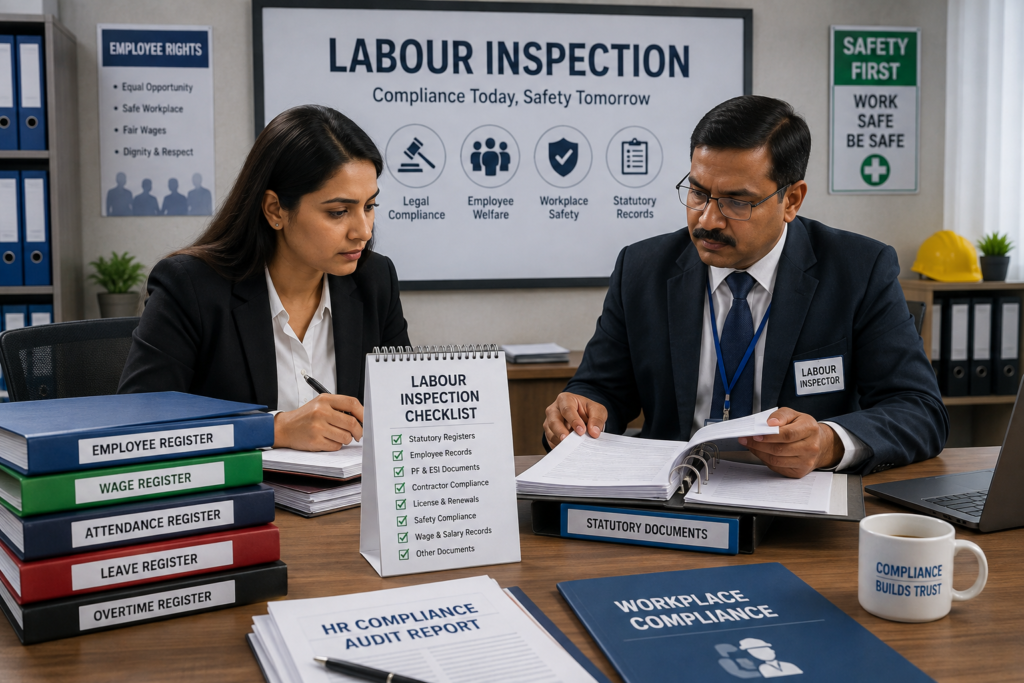
Labour inspections are designed to ensure organizations comply with employment laws, workplace safety standards, and employee welfare regulations. However, for many HR professionals, labour inspections quickly become stressful, time-consuming, and costly experiences.
The problem isn’t the inspection itself—it’s the lack of preparation.
Companies that neglect labour law compliance, maintain incomplete records, or fail to update statutory documents often face penalties, legal notices, and reputational damage. Fortunately, with the right inspection preparation strategy, HR teams can transform labour inspections from nightmares into smooth compliance exercises.
Why Labour Inspections Become Nightmares
1. Poor Documentation
One of the biggest reasons organizations fail labour inspections is missing or inaccurate documentation.
Labour inspectors typically review:
- Employee registers
- Attendance records
- Wage registers
- Leave records
- Appointment letters
- Salary slips
- ESI & PF records
- Contractor compliance documents
Even a few missing records can raise serious compliance concerns.
2. Lack of Labour Law Compliance Awareness
Many organizations unknowingly violate labour laws because HR teams are unaware of recent regulatory updates.
Common issues include:
- Incorrect wage calculations
- Overtime violations
- Non-maintenance of statutory registers
- Improper contractor management
- Failure to display mandatory notices
Regular HR compliance audits help identify these issues before inspectors do.
3. Last-Minute Inspection Preparation
A common mistake is waiting until an inspection notice arrives.
When companies rush to organize documents at the last minute:
- Records become inconsistent.
- Employees receive conflicting instructions.
- Compliance gaps become obvious.
- Stress levels increase across departments.
Inspection readiness should be an ongoing process—not a one-day activity.
4. Incomplete Contractor Compliance
Organizations ehttps://vpassociatess.in/mploying contract labour often overlook contractor documentation.
Inspectors frequently verify:
- Contractor licenses
- Wage payment records
- ESI & PF compliance
- Attendance registers
- Labour welfare provisions
The principal employer remains accountable for contractor compliance failures.
5. Poor Internal Communication
HR, payroll, administration, legal, and operations often maintain separate records.
During inspections, inconsistent information from different departments raises red flags.
A centralized compliance management system ensures everyone works with the same updated information.
How HR Professionals Can Prepare for Labour Inspections
Create a Labour Inspection Checklist
A comprehensive labour inspection checklist should include:
- Employee documentation
- Wage records
- Statutory registers
- PF & ESI records
- Contractor documents
- Safety compliance records
- Display notices
- Leave registers
- Bonus records
- Gratuity records
Conduct monthly reviews instead of annual inspections.
Conduct https://vpassociatess.in/Regular HR Compliance Audits
Internal compliance audits help identify:
- Missing documents
- Expired licenses
- Register discrepancies
- Payroll inconsistencies
- Non-compliance risks
Quarterly audits significantly reduce inspection risks.
Digitize Compliance Records
Manual record keeping increases the risk of:
- Lost files
- Incomplete documentation
- Duplicate records
- Human errors
Digital compliance management improves accessibility and inspection readiness.
Train HR and Management Teams
Every HR professional should understand:
- Applicable labour laws
- Inspection procedures
- Required statutory registers
- Employee rights
- Employer obligations
Regular compliance training minimizes costly mistakes.
Stay Updhttps://vpassociatess.in/ated with Labour Law Changes
Labour regulations continue to evolve.
Subscribe to government notifications and consult labour compliance experts to ensure your organization remains compliant.
Common Documents Labour Inspectors Ask For
Before any inspection, HR should verify the availability of:
- Employee Register
- Attendance Register
- Wage Register
- Overtime Register
- Leave Register
- ESI Records
- PF Records
- Bonus Register
- Gratuity Records
- Contractor Register
- License Copies
- Appointment Letters
- Salary Slips
- Identity Records
- Safety Training Records
Maintaining these documents consistently reduces inspection delays.
Benefits of Being Inspection Ready
Organizations with strong labour law compliance enjoy:
- Faster inspections
- Reduced legal risk
- Lower penalties
- Improved employee trust
- Better corporate reputation
- Higher operational efficiency
- Easier statutory audits
Compliance is no longer just a legal obligation—it is a business advantage.
Conclusion
Labour inspections become nightmares only when organizations treat compliance as an afterthought.
By maintaining accurate records, conducting regular HR compliance audits, preparing a labour inspection checklist, and staying updated with labour law changes, HR professionals can confidently manage inspections while protecting their organizations from legal and financial risks.
Inspection readiness is an ongoing commitment—not a last-minute exercise.
Leave a Reply