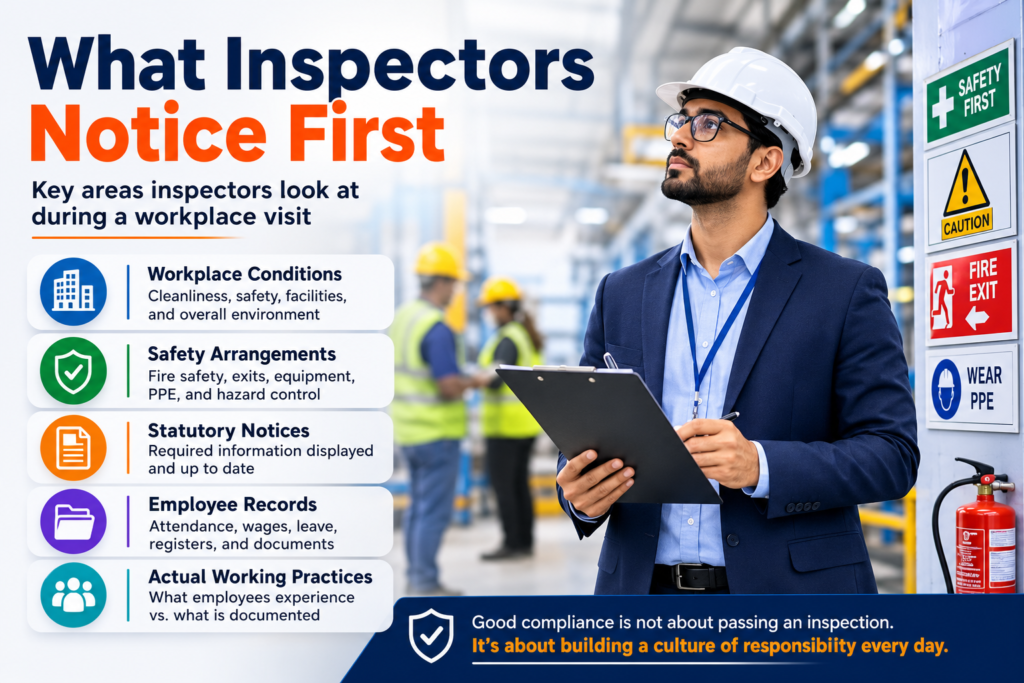
When a labour, safety, factory, or compliance inspector visits a workplace, the first few minutes can reveal a lot about how seriously the organization manages compliance.
Many businesses assume inspectors will immediately ask for registers, licences, or documents. In reality, inspectors may first observe the workplace itself—employee conditions, safety practices, notices, cleanliness, working arrangements, and whether the information displayed or provided appears consistent with the records.
Understanding what inspectors notice first can help employers identify gaps before they become compliance problems.
1. Workplace Conditions
The physical condition of the workplace is often one of the first things an inspector can observe.
Depending on the nature of the establishment, attention may be given to:
- General cleanliness and housekeeping
- Safe access and movement within the premises
- Proper lighting and ventilation
- Workplace hazards
- Emergency exits and accessibility
- Basic employee welfare facilities
A workplace that visibly appears poorly maintained can immediately raise questions about whether other compliance requirements are also being neglected.
2. Safety Arrangements
Safety is particularly important in factories, warehouses, construction sites, and other higher-risk workplaces.
Inspectors may look for visible safety measures such as:
- Fire safety arrangements
- Emergency exits
- Safety equipment
- Protective gear where required
- Hazard warnings and signage
- Safe operation of machinery
- Emergency preparedness
Safety should not exist only on paper. The actual workplace should reflect the safety procedures documented by the organization.
3. Statutory Notices and Information
Required notices and workplace information can also attract attention.
Depending on the applicable law and establishment, inspectors may check whether required information is properly displayed and accessible to employees.
This may include information relating to:
- Working hours
- Weekly holidays
- Wage-related information
- Employee rights
- Emergency contacts
- Relevant statutory notices
Missing, outdated, or incorrectly displayed information can create unnecessary questions during an inspection.
4. Employee Records
After observing the workplace, inspectors may ask for relevant records.
Common areas that may come under review include:
- Attendance and working-hour records
- Wage and salary records
- Leave records
- Employee registers
- Overtime records
- Appointment or employment documentation
- Statutory contribution records
- Licences and registrations
The important point is consistency.
If attendance records show one set of working hours while payroll reflects another, the discrepancy may require explanation.
5. Actual Working Practices
Inspectors may compare what the company says with what employees actually experience.
For example, an organization may have written policies concerning working hours, overtime, leave, or safety. But if actual practices do not match those policies, the documentation alone may not protect the employer from compliance concerns.
A strong compliance system therefore connects policy, documentation, and actual workplace practice.
6. Employee Awareness
Employees may also be asked questions during an inspection.
Inspectors may want to understand whether employees know about basic workplace practices, such as working hours, wage-related information, safety procedures, or available facilities.
If employees consistently provide answers that conflict with official records, it may raise further questions.
This is why compliance should not be treated as a paperwork exercise. Employees should understand the workplace rules that directly affect them.
7. Signs of Poor Record-https://vpassociatess.in/Keeping
Disorganized records can create a negative impression even when the underlying business is trying to comply.
Common warning signs include:
- Missing documents
- Incomplete registers
- Inconsistent employee details
- Unexplained gaps in records
- Outdated licences
- Documents maintained only after an inspection notice
- Different information across HR, payroll, and statutory records
Proper record management makes inspections easier and reduces avoidable confusion.
8. Whether Compliance Is Proactive or Reactive
One of the biggest differences between a mature compliance system and a weak one is preparation.
Businesses that review their compliance regularly are more likely to identify problems before an inspector does.
Instead of waiting for an inspection, employers should periodically review:
Legal requirements → Documentation → https://vpassociatess.in/Workplace practices → Employee records → Safety and welfare measures
This creates a more reliable compliance framework.
How Businesses Can Prepare
Before an inspection, management should conduct an internal compliance review.
Check whether:
- Required registrations and licences are valid.
- Statutory records are complete and updated.
- Attendance and payroll information match.
- Required notices are properly displayed.
- Safety arrangements are functioning in practice.
- Employee documentation is organized.
- Workplace conditions meet applicable requirements.
- Identified compliance gaps have been https://vpassociatess.in/documented and corrected.
Final Thoughts
Inspectors do not necessarily need hours to identify warning signs. The workplace, records, notices, and employee practices can provide an immediate picture of how compliance is being managed.
The goal should not simply be to “pass an inspection.” The real objective is to build a compliance system that works every day—not only when an inspector arrives.
For businesses, regular labour law and compliance reviews can help identify documentation gaps, operational risks, and areas requiring corrective action before they become bigger problems.
Need help reviewing your organization’s labour law and compliance requirements? Consider taking a professional compliance health check before the next inspection.
Leave a Reply