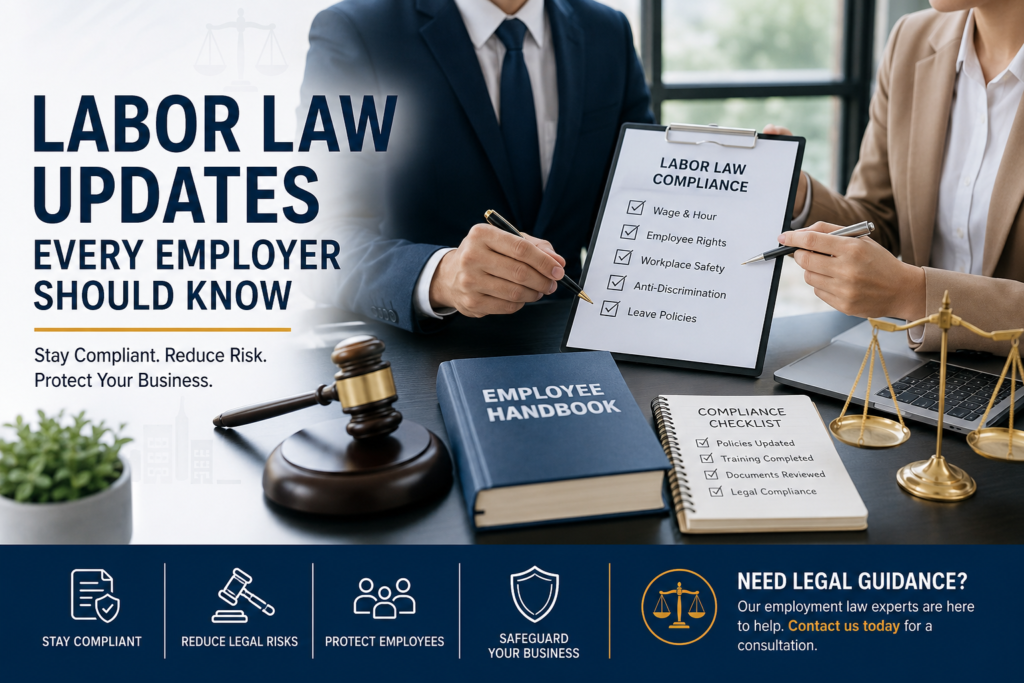
Stay Compliant and Protect Your Business with the Latest Labor Law Updates
Running a business involves more than managing employees and growing revenue. Employers must also stay informed about labor law updates every employer should know to avoid legal risks, costly penalties, and workplace disputes. Labor laws continue to evolve to protect employee rights while ensuring fair workplace practices.
Whether you own a small business or manage a growing organization, understanding the latest employment regulations can help you maintain compliance and create a productive work environment.
Why Labor Law Updates Matter
Employment laws are constantly changing due to new government regulations, court decisions, and workplace trends. Ignoring these changes can expose businesses to lawsuits, financial penalties, and reputational damage.
Keeping up with labor law updates every employer should know enables employers to:
- Reduce legal risks
- Maintain workplace compliance
- Improve employee satisfaction
- Avoid expensive employment disputes
- Build a fair and transparent workplace culture
Key Labor Law Updates Every Employer Should Know
1. Wage and Hour Compliance
Employers should regularly review wage policies to ensure compliance with minimum wage laws, overtime regulations, and employee classification requirements.
Common compliance issues include:
- Misclassifying employees as independent contractors
- Incorrect overtime calculations
- Payroll record errors
- Failure to pay mandatory benefits
Conducting periodic payroll audits can significantly reduce compliance risks.
2. Workplace Harassment and Discrimination Policies
Modern labor laws continue strengthening protections against workplace harassment and discrimination.
Employers should:
- Update anti-harassment policies
- Conduct regular employee training
- Establish confidential reporting procedures
- Investigate complaints promptly
- Maintain proper documentation
A proactive workplace culture helps reduce legal exposure.
3. Remote and Hybrid Work Regulations
As remote work becomes permanent for many organizations, employers must address new compliance responsibilities.
Important considerations include:
- Work hour tracking
- Expense reimbursement
- Data privacy
- Cybersecurity
- Workplace safety obligations for remote employees
Clear remote work policies reduce misunderstandings and compliance issues.
4. Employee Leave Requirements
Many jurisdictions continue expanding employee leave protections.
Employers should review policies related to:
- Medical leave
- Family leave
- Paid sick leave
- Pregnancy accommodations
- Mental health leave
Regular policy updates help ensure compliance with changing leave regulations.
5. Employee Classification Rules
Misclassifying workers remains one of the most common employment law violations.
Proper classification affects:
- Taxes
- Overtime eligibility
- Benefits
- Workers’ compensation
- Employment rights
Businesses should periodically review contractor agreements and job responsibilities.
How Can Employers Stay Compliant with Labor Law Changes?
Monitor Legislative Updates
Subscribe to reliable employment law resources and government labor department announcements.
Conduct Regular HR Audits
Routine compliance reviews help identify outdated policies before they become legal problems.
Train Managers
Supervisors should understand current employment laws and company policies to ensure consistent workplace practices.
Maintain Accurate Documentation
Well-organized employment records provide valuable protection during audits or disputes.
Work with Employment Law Professionals
Legal professionals can review contracts, policies, employee handbooks, and workplace procedures to reduce compliance risks.
Common Mistakes Employers Should Avoid
Many businesses unknowingly violate labor laws by:
- Using outdated employee handbooks
- Failing to document disciplinary actions
- Ignoring overtime regulations
- Misclassifying employees
- Missing mandatory workplace postings
- Inconsistent enforcement of workplace policies
- Delaying investigations into employee complaints
Avoiding these mistakes can significantly reduce legal liability.
Benefits of Staying Updated on Labor Laws
Businesses that remain compliant enjoy several advantages:
- Lower legal risk
- Improved employee trust
- Better workplace morale
- Reduced turnover
- Stronger employer reputation
- Fewer government investigations
- Better operational efficiency
Compliance should be viewed as a long-term investment rather than a legal obligation.
When Should Employers Consult an Employment Lawyer?
Professional legal guidance is recommended when:
- Hiring new employees
- Expanding into new states or countries
- Updating employment contracts
- Responding to employee complaints
- Conducting layoffs
- Handling workplace investigations
- Revising employee handbooks
Seeking legal advice early often prevents larger disputes later.
Conclusion
Understanding labor law updates every employer should know is essential for protecting your business, supporting your workforce, and maintaining legal compliance. As employment regulations continue to evolve, proactive employers who regularly review policies, train managers, and seek professional legal guidance are better positioned for long-term success.
If you’re unsure whether your business complies with current labor laws, consulting an experienced employment law attorney can help you identify risks, update workplace policies, and avoid costly legal issues before they arise.
Leave a Reply