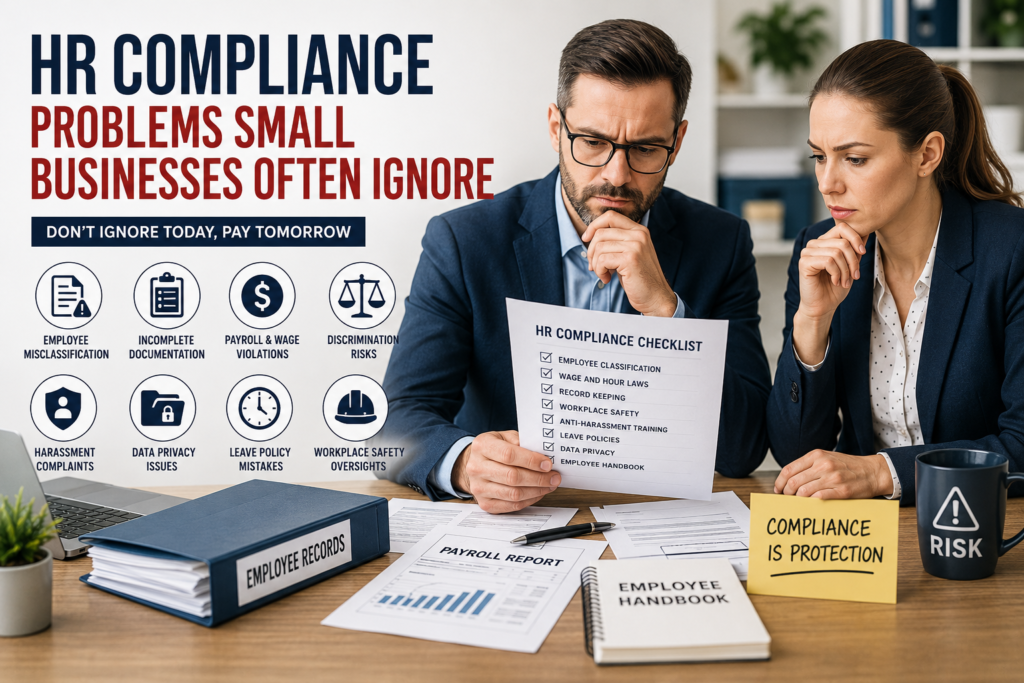
Running a small business means wearing multiple hats, but HR compliance problems small businesses often ignore can quickly turn into expensive legal disputes, government penalties, and reputational damage. Many business owners assume employment laws only apply to large corporations, but that’s a costly misconception.
Whether you’re hiring your first employee or managing a growing team, understanding HR compliance problems small businesses often ignore is essential to protecting your business. This guide explains the most common compliance mistakes, why they matter, and how you can prevent them before they become serious issues.
Why HR Compliance Matters for Small Businesses
HR compliance refers to following employment laws, workplace regulations, and company policies that protect both employers and employees. Ignoring these responsibilities can result in:
- Government fines and penalties
- Employee lawsuits
- Tax complications
- Workplace conflicts
- Reduced employee trust
- Damage to your business reputation
Many compliance issues develop gradually, making them difficult to notice until an audit or legal complaint occurs.
Common HR Compliance Problems Small Businesses Often Ignore
What happens when employee classifications are incorrect?
One of the biggest HR compliance problems small businesses often ignore is misclassifying workers as independent contractors instead of employees.
Misclassification can affect:
- Payroll taxes
- Overtime eligibility
- Employee benefits
- Workers’ compensation
- Unemployment insurance
A simple classification mistake can result in significant back taxes and penalties.
Why is incomplete employee documentation risky?
Many businesses fail to maintain organized employee records.
Important documentation includes:
- Employment contracts
- Tax forms
- Identity verification
- Performance records
- Leave requests
- Disciplinary actions
Missing documentation makes it difficult to defend employment decisions during audits or disputes.
Are outdated employee handbooks creating compliance risks?
Employment laws evolve regularly. Unfortunately, many small businesses continue using handbooks created years ago.
An outdated handbook may contain policies that conflict with current regulations regarding:
- Leave policies
- Remote work
- Anti-harassment
- Equal employment
- Workplace safety
- Data privacy
Regular policy reviews help reduce legal exposure.
Why should wage and hour compliance never be overlooked?
Payroll mistakes are among the most expensive compliance failures.
Common issues include:
- Unpaid overtime
- Incorrect minimum wage calculations
- Off-the-clock work
- Missed meal breaks
- Payroll record errors
Employees are increasingly aware of their rights, making wage compliance more important than ever.
How can poor hiring practices increase legal risk?
Recruitment mistakes can expose businesses to discrimination claims.
Avoid asking questions related to:
- Age
- Religion
- Disability
- Pregnancy
- Marital status
- National origin
Hiring decisions should always be based on job-related qualifications.
Why is workplace harassment training essential?
Some employers assume harassment training is only necessary for large organizations.
In reality, every workplace benefits from:
- Clear reporting procedures
- Manager training
- Employee awareness
- Prompt investigations
- Written anti-harassment policies
Ignoring complaints often increases legal liability.
Are leave policies compliant with current regulations?
Many businesses misunderstand employee leave requirements.
Review policies covering:
- Sick leave
- Family leave
- Medical accommodations
- Pregnancy accommodations
- Military leave
Even businesses with a small workforce may have legal obligations depending on their jurisdiction.
What employee privacy rules are commonly overlooked?
Modern businesses collect sensitive employee information including:
- Social Security numbers
- Banking information
- Medical documentation
- Background checks
Protecting confidential employee data is both a legal and ethical responsibility.
Why is workplace safety still an HR responsibility?
Safety compliance extends beyond construction and manufacturing.
Office-based businesses should also address:
- Emergency procedures
- Fire safety
- Ergonomic workstations
- Incident reporting
- Safety training
A safe workplace reduces injuries and improves employee confidence.
Best Practices to Avoid HR Compliance Problems
Small businesses can reduce compliance risks by following these practices:
- Conduct annual HR compliance audits.
- Update employee handbooks regularly.
- Maintain accurate personnel records.
- Train managers on employment laws.
- Review payroll processes.
- Document disciplinary actions consistently.
- Stay informed about changing labor regulations.
- Consult HR or legal professionals when needed.
Taking proactive steps today is far less expensive than responding to lawsuits later.
The Cost of Ignoring HR Compliance
Ignoring compliance can lead to:
- Financial penalties
- Employee turnover
- Government investigations
- Legal expenses
- Lost productivity
- Damage to business credibility
For many small businesses, a single compliance mistake can have long-term financial consequences.
Conclusion
The HR compliance problems small businesses often ignore rarely appear overnight. Instead, they build slowly through outdated policies, incomplete documentation, payroll mistakes, and inconsistent employment practices.
By regularly reviewing HR policies, educating managers, maintaining accurate records, and monitoring legal updates, small business owners can reduce risk while creating a safer and more professional workplace.
Investing in compliance today protects your employees, your reputation, and the future of your business.
Leave a Reply