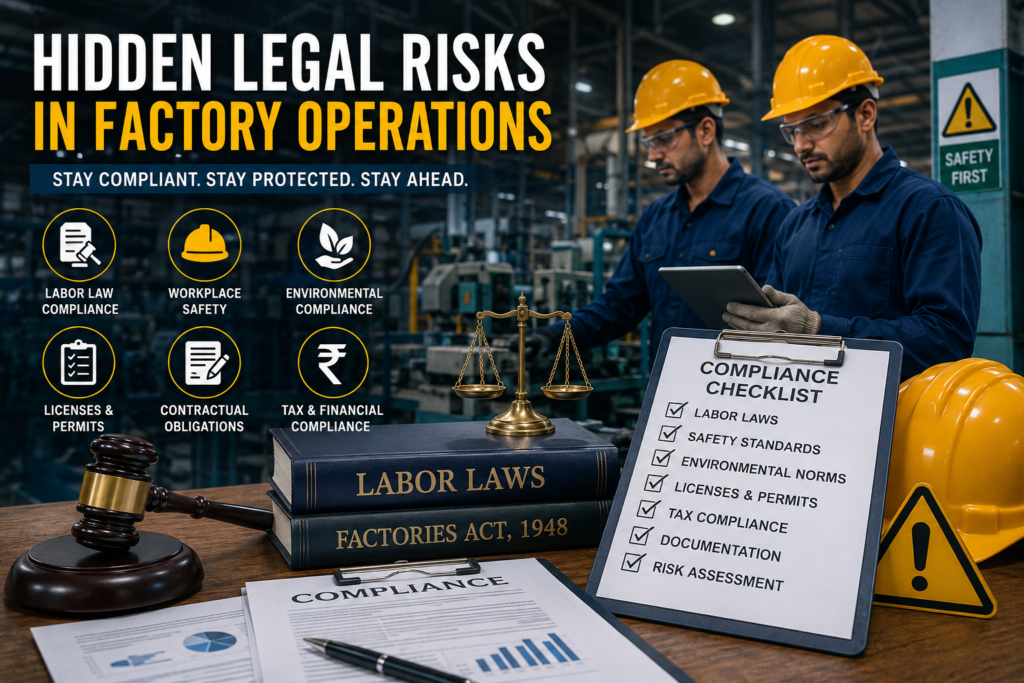
Factory operations involve much more than production targets, machinery, and workforce management. While most manufacturers focus on productivity and profitability, many overlook the hidden legal risks in factory operations that can lead to severe financial penalties, business disruptions, or even criminal liability.
From labor law violations to environmental compliance issues, legal risks often remain unnoticed until an inspection, accident, or lawsuit exposes them. Understanding these risks is essential for protecting your business, maintaining operational continuity, and building a compliant manufacturing environment.
Why Hidden Legal Risks in Factory Operations Matter
Many factory owners assume they are compliant simply because they possess basic licenses. However, compliance is an ongoing process involving multiple laws, periodic renewals, employee welfare standards, environmental obligations, and workplace safety requirements.
Ignoring these responsibilities can result in:
- Heavy government penalties
- Suspension of factory licenses
- Civil and criminal litigation
- Workplace accidents and compensation claims
- Reputational damage
- Production shutdowns
Regular compliance reviews help businesses identify hidden legal issues before they become costly problems.
Common Hidden Legal Risks in Factory Operations
What happens when labor law compliance is ignored?
One of the biggest industrial legal risks comes from non-compliance with labor laws. Even minor documentation errors may trigger inspections and penalties.
Common issues include:
- Incorrect wage calculations
- Delayed salary payments
- Missing employment contracts
- Improper overtime records
- Non-compliance with working hour regulations
- Failure to maintain statutory registers
Maintaining proper documentation significantly reduces legal exposure.
How do workplace safety violations create legal liability?
Every manufacturing facility must comply with applicable factory safety regulations. Failure to provide a safe workplace may result in:
- Employee injury claims
- Criminal prosecution
- Insurance disputes
- Government investigations
- Temporary factory closure
Important safety measures include:
- Regular equipment inspections
- Employee safety training
- Fire safety compliance
- Emergency evacuation plans
- PPE enforcement
- Accident reporting systems
Safety compliance protects both employees and business owners.
Why environmental compliance is often overlooked
Many factories underestimate the importance of environmental compliance for manufacturers.
Potential risks include:
- Improper waste disposal
- Air pollution violations
- Water discharge issues
- Hazardous chemical storage violations
- Missing environmental permits
Environmental regulators increasingly conduct surprise inspections, making continuous compliance essential.
Can outdated licenses become a legal problem?
Absolutely.
Factories often forget to renew:
- Factory License
- Pollution Control Board approvals
- Fire NOC
- Boiler certificates
- Electrical safety certificates
- Trade licenses
Expired approvals may invalidate operations and attract significant penalties.
Creating a factory compliance checklist helps businesses monitor renewal deadlines.
Contractual Risks That Many Factories Ignore
Legal risks are not limited to government compliance.
Poorly drafted agreements with:
- Suppliers
- Contractors
- Employees
- Vendors
- Logistics companies
can lead to disputes over payments, liabilities, delays, and quality issues.
Every contract should clearly define:
- Responsibilities
- Payment terms
- Dispute resolution
- Indemnity clauses
- Termination conditions
- Confidentiality obligations
Intellectual Prohttps://vpassociatess.inperty Risks in Manufacturing
Many manufacturers unknowingly expose themselves to IP disputes.
Potential risks include:
- Unauthorized use of trademarks
- Design infringement
- Patent violations
- Employee confidentiality breaches
- Sharing proprietary manufacturing processes
Protecting intellectual property safeguards long-term competitiveness.
Data Privacy and Digital Compliance
Modern factories increasingly rely on ERP systems, biometric attendance, cloud storage, and digital monitoring.
These technologies introduce additional legal obligations involving:
- Employee data protection
- Cybersecurity
- Vendor data sharing
- Digital consent
- Record retention
Ignoring digital compliance can create unexpected legal liabilities.
Tax and Financial Comhttps://vpassociatess.inpliance Risks
Financial non-compliance remains one of the most expensive legal risks.
Manufacturers should regularly review:
- GST compliance
- TDS deductions
- Accounting records
- Statutory audits
- Vendor tax documentation
- Financial reporting accuracy
Periodic financial audits help identify issues before tax authorities do.
How a Legal Audit Helps Reduce Factory Risks
Conducting a legal audit for fhttps://vpassociatess.inactories provides a structured review of compliance obligations.
A legal audit typically evaluates:
- Labor law compliance
- Factory licenses
- Safety standards
- Environmental approvals
- Employment documentation
- Vendor contracts
- Insurance coverage
- Regulatory filings
Regular audits reduce the likelihttps://vpassociatess.inhood of enforcement actions and improve overall governance.
Best Practices to Minimize Hidden Legal Risks in Factory Operations
Manufacturers should adopt a proactive compliance strategy by:
- Maintaining an updated factory compliance checklist
- Conducting quarterly legal reviews
- Training employees on compliance requirements
- Monitoring regulatory changes
- Renewing licenses before expiry
- Reviewing supplier and contractor agreements
- Performing annual legal audits
- Documenting all statutory records accurately
These measures significantly reduce operational and legal exposure.
Conclusion
The hidden legal risks in factory operations often remain invisible until they trigger costly investigations, litigation, or operational disruptions. By proactively addressing labor law compliance, environmental obligations, workplace safety, licensing requirements, contractual protections, and periodic legal audits, manufacturers can safeguard their business while ensuring long-term operational stability.
Legal compliance should not be viewed merely as a regulatory requirement—it is a strategic investment that protects reputation, profitability, and sustainable growth.
Leave a Reply