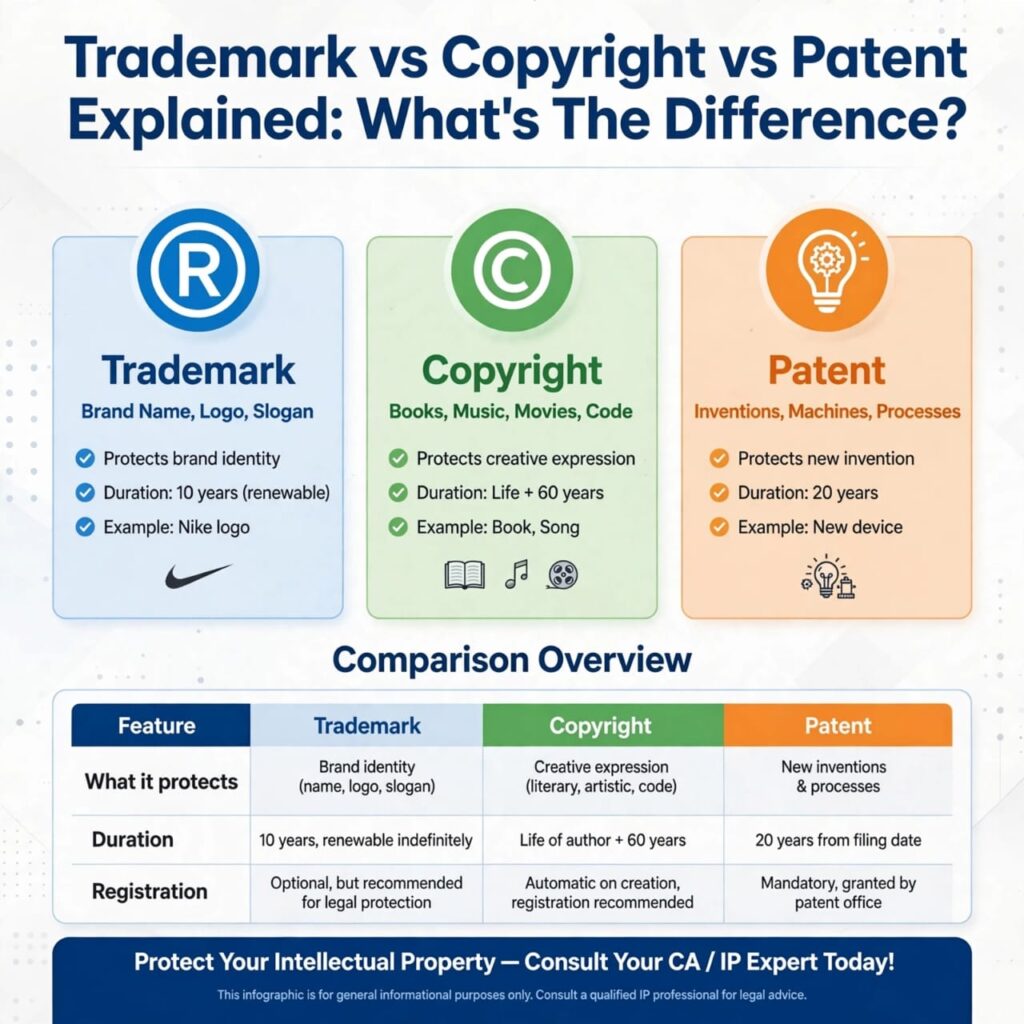
In today’s competitive business environment, protecting your intellectual property is just as important as creating it. Whether you have built a unique brand, developed an innovative product, or created original content, the right form of intellectual property protection can help safeguard your work.
Three commonly used forms of intellectual property protection are Trademark, Copyright, and Patent. Although they are often used interchangeably, each protects something different.
Understanding the difference between trademark vs copyright vs patent can help individuals, startups, creators, and businesses choose the appropriate protection for their intellectual assets.
What Is a Trademark?
A trademark protects elements that identify and distinguish the goods or services of a business from those of others.
Examples include:
- Brand names
- Business names
- Logos
- Taglines
- Symbols
- Certain distinctive brand elements
For example, a unique business name or logo can become an important part of a company’s identity. Registering a trademark can help establish legal rights over the mark and can make it easier to take action against unauthorized use.
Why Is Trademark Protection Important?
A strong brand can become one of a company’s most valuable assets. Without appropriate protection, another business may use a similar name or identity, potentially causing confusion among customers.
Trademark registration can help businesses:
- Protect their brand identity
- Build consumer recognition
- Strengthen their legal position
- Prevent unauthorized use of the registered mark
- Create a valuable intellectual property asset
What Is Copyright?
Copyright generally protects original creative and artistic works.
It can apply to works such as:
- Blog articles
- Books and written content
- Photographs
- Videos
- Music and songs
- Artwork and illustrations
- Software and certain computer programs
- Other original creative works
For example, if a company creates an original promotional video or a photographer takes an original photograph, copyright may protect the creative expression in that work.
Why Is Copyright Important?
Digital content can be copied and shared very easily. Copyright protection can help creators and businesses establish rights over their original work and address unauthorized reproduction or use.
It is particularly relevant for:
- Content creators
- Writers
- Designers
- Photographers
- Musicians
- Software developers
- Marketing agencies
- Businesses producing original content
What Is a Patent?
A patent is designed to protect https://vpassociatess.in/qualifying inventions and innovations.
Depending on the applicable legal requirements, a patent may protect an invention involving a new product, process, or technical solution.
Examples may include:
- New machines
- Innovative manufacturing processes
- Technical products
- Certain new methods or systems
- Technological inventions
Patent protection is different from trademark and copyright because it focuses on inventions and technical innovations, rather than brand identity or creative expression.
Why Is Patent Protection Important?
For businesses that invest significant time and money in research and development, protecting an invention can be extremely important.
A patent can provide the patent holder with legal rights that can restrict others from making, using, selling, or commercially exploiting the patented invention, subject to the applicable law and patent terms.
Trademark vs Copyright vs Patent: Key Differences
| Feature | Thttps://vpassociatess.in/rademark | Copyright | Patent |
|---|---|---|---|
| Primarily protects | Brand identity | Original creative works | Inventions and innovations |
| Common examples | Name, logo, tagline | Books, photos, videos, software | Products, machines, processes |
| Main purpose | Distinguish goods/services | Protect creative expression | Protect qualifying inventions |
| Relevant for | Businesses and brands | Creators and businesses | Inventors and innovative businesses |
| Protection depends on | Trademark law and registration/use | Copyright law and the nature of the work | Patent law and examination requirements |
Can One Business Need All Three?
Yes. A single business may have assets that qualify for different types of intellectual property protection.
For example, a technology company could have:
- Trademark: Its company name and logo
- Copyright: Its website content, photographs, marketing materials, and software code
- Patent: A qualifying new technical invention or process
This is why businesses should look at their intellectual property as a complete portfolio rather than relying on only one type of protection.
Common Mistakes Businesses Make
One of the most common mistakes is assuming that registering a business name automatically protects every aspect of the brand. Business registration, trademark protection, copyright, and patent rights serve different purposes.
Other mistakes include:
- Using a brand name without checking for conflicting trademarks
- Delaying trademark registration until the brand becomes valuable
- Assuming copyright protects an underlying idea rather than its original expression
- Publicly disclosing an invention without considering patent implications
- Failing to maintain proper ownership and documentation of intellectual property
- Using someone else’s copyrighted material without appropriate authorization
Which Protection Do You Need?
A simple way to remember the distinction is:
Trademark = Brand
Copyright = Creative Work
Patent = Invention
If your primary concern is protecting your business name, logo, or brand identity, trademark protection may be relevant.
If you have created original written, visual, musical, or digital content, copyright may be relevant.
If you have developed a new technical invention or process, patent protection may be appropriate, provided it meets the applicable legal requirements.
Final Thoughts
Intellectual property can represent a significant part of a business’s long-term value. Understanding the difference between trademark, copyright, and patent is an important first step toward protecting those assets.
Instead of assuming that one type of registration covers everything, businesses and creators should identify what they have actually created and determine which form of intellectual property protection applies.
Leave a Reply