Business compliance can often feel complicated. From maintaining documents and filing returns to meeting statutory deadlines, even a small mistake can lead to notices, penalties, or unnecessary business disruptions.
A structured compliance process helps businesses stay organized, avoid last-minute pressure, and focus on growth. At V.P. Associates, our approach is designed to make compliance systematic, transparent, and easier to manage.
What Is Business Compliance?
Business compliance means following the laws, regulations, and statutory requirements applicable to your organization. Depending on your business structure and industry, this may include:
- Company and LLP compliance
- GST compliance
- Income tax-related requirements
- PF and ESI compliance
- Labour law compliance
- Employee documentation
- Licenses and registrations
- Annual filings and statutory records
The exact requirements vary from one business to another, which is why compliance should be managed according to your specific business needs.
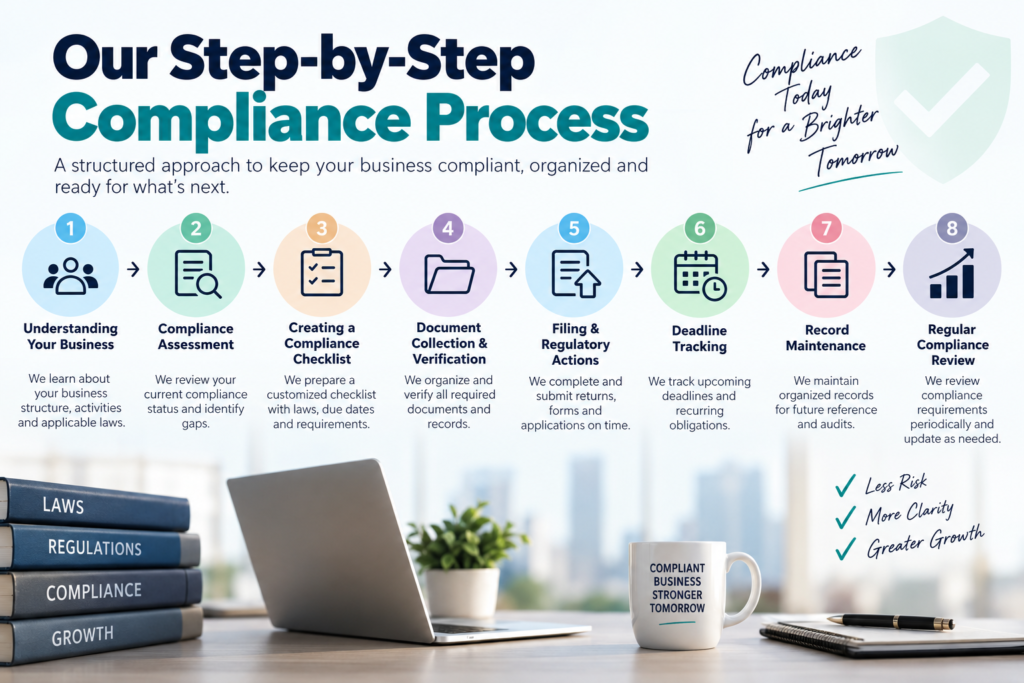
Our Step-by-Step Compliance Process
Step 1: Understanding Your Business
We begin by understanding your business structure, activities, workforce, registrations, and applicable laws.
This helps identify which compliances actually apply to your organization instead of following a generic checklist.
Step 2: Compliance Assessment
The next step is reviewing your existing compliance position.
We check important areas such as:
- Pending filings
- Registration status
- Required documents
- Statutory records
- Upcoming deadlines
- Possible gaps or inconsistencies
This assessment helps identify areas that require immediate attention.
Step 3: Creating a Compliance Checklist
Once the requirements are identified, we prepare a structured compliance checklist.
The checklist can include:
Compliance → Applicable Law → Due Date → Required Documents → Responsible Person → Status
Having everything organized in one place makes it easier to track obligations and reduces the possibility of missing important deadlines.
Step 4: Document Collection & Verification
Proper documentation is an important part of compliance.
We help organize and verify relevant documents, records, returns, registrations, employee information, and other required details.
This step also helps identify missing or outdated documentation before it creates bigger problems.
Step 5: Filing & Regulatory Actions
After verification, applicable returns, forms, applications, or other statutory requirements are completed and submitted within the prescribed timelines.
Accuracy is important at this stage because incorrect information can result in notices, corrections, or additional compliance work.
Step 6: Deadline Tracking
Compliance doesn’t end after one filing.
We track upcoming deadlines and recurring obligations so businesses can prepare in advance instead of rushing at the last moment.
A proactive approach can significantly reduce compliance-related stress.
Step 7: Record Maintenance
Maintaining proper records is just as important as completing filings.
We encourage businesses to maintain organized records of:
- Filed returns
- Acknowledgements
- Licenses
- Certificates
- Notices
- Employee records
- Statutory registers
- Supporting documents
Well-maintained records can also make future audits, inspections, and verification processes easier.
Step 8: Regular Compliance Review
Rules, business activities, employees, and registrations can change over time. Therefore, compliance requirements should also be reviewed periodically.
Regular reviews help identify new obligations and ensure that existing processes remain aligned with applicable requirements.
Why a Step-by-Step https://vpassociatess.in/Process Matters
A systematic compliance process can help businesses:
- Reduce the risk of missed deadlines
- Identify compliance gaps early
- Keep documentation organized
- Improve accountability
- Reduce last-minute filing pressure
- Prepare better for inspections or notices
- Maintain better statutory records
Most importantly, it allows business owners to spend less time worrying about compliance and more time concentrating on their core operations.
Don’t Wait Until a Notice Arrives
One of the biggest compliance mistakes businesses make is treating compliance as something to address only after receiving a government notice.
Compliance works best when it is preventive rather than reactive.
Regular monitoring, timely documentation, https://vpassociatess.in/accurate filings, and periodic reviews can help businesses stay prepared throughout the year.
Final Thoughts
Compliance doesn’t have to be confusing when it is handled through a clear and organized process.
From understanding your requirements and identifying gaps to filing, tracking deadlines, maintaining records, and conducting regular reviews, every step plays an important role in keeping your business compliant.
Leave a Reply