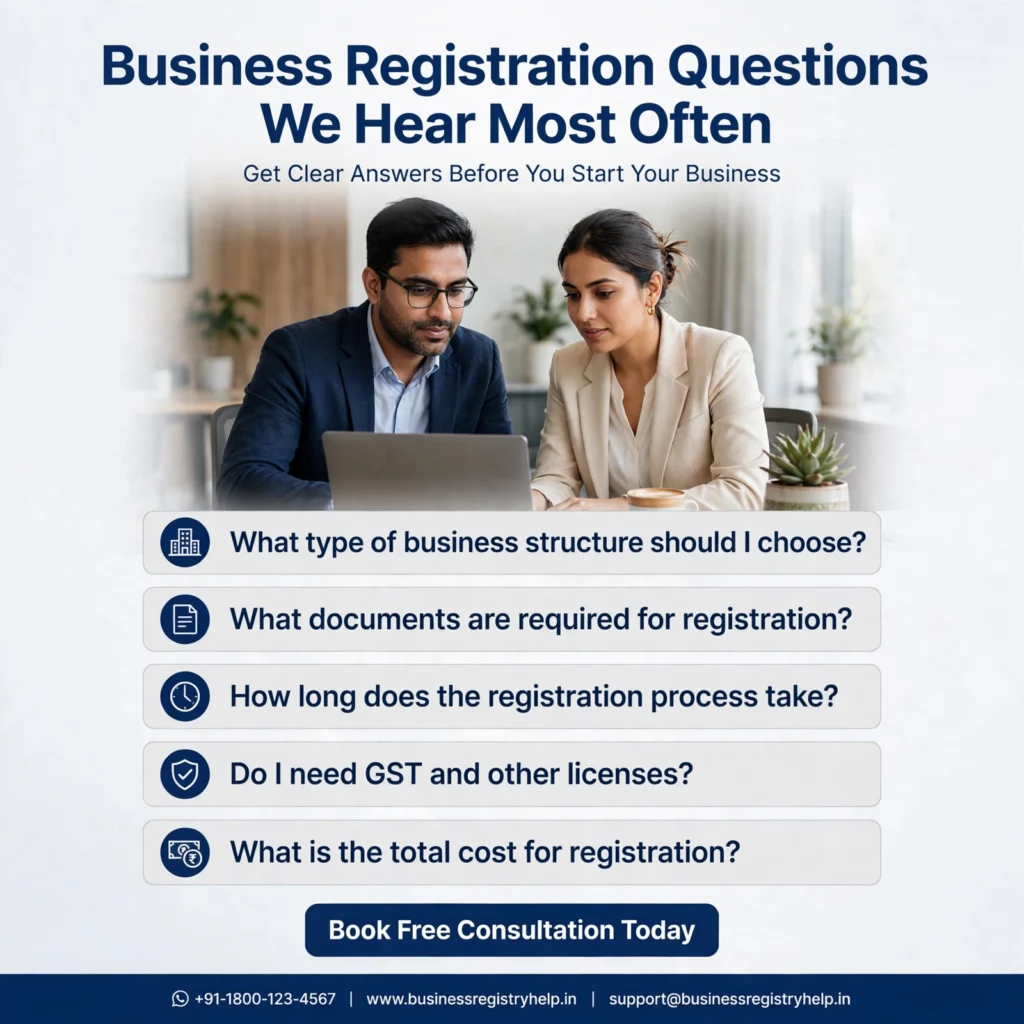
Starting a business is an exciting step, but the registration process can often feel confusing. Entrepreneurs commonly have questions about business structure, documents, government requirements, costs, timelines, and ongoing compliance.
Getting the registration right from the beginning can help your business operate smoothly and avoid unnecessary legal or compliance issues later.
Here are some of the most common questions businesses ask about registration.
1. Do I Really Need to Register My Business?
The answer depends on the type of business you are starting and the structure you choose.
A business may operate as a sole proprietorship, partnership, LLP, private limited company, or another suitable structure. Each option has different legal, taxation, compliance, and liability implications.
Before registering, it is important to understand which structure best fits your business goals.
2. Which Business Structure Should I Choose?
This is one of the most common questions from new entrepreneurs.
The right structure depends on factors such as:
- Number of owners or partners
- Business activities
- Investment requirements
- Liability protection
- Tax considerations
- Future expansion plans
- Funding or investor requirements
For example, a business planning to bring in investors may have different requirements from a small owner-operated business.
3. What Documents Are Required?
The documents depend on the type of registration. Generally, businesses may need identity and address proofs of promoters or partners, registered office details, photographs, and other supporting documents.
It is important that the information provided in the documents is accurate and consistent to prevent unnecessary delays.
4. How Long Does Business Registration Take?
The timeline varies depending on the type of registration, completeness of documents, government processing, and whether any clarification or correction is required.
Submitting complete and accurate information from the beginning can make the process considerably smoother.
5. Can I Register My Business From Home?
In many cases, a residential property can be used as a registered office, subject to applicable requirements and permissions.
However, the rules can vary depending on the business structure, location, property arrangement, and local regulations. It is advisable to check the requirements before using a residential address for registration.
6. Do I Need GST Registration?
Not every business automatically needs GST registration.
GST registration requirements can depend on factors such as turnover, nature of business, location, type of supplies, and applicable GST provisions.
Even when registration is not https://vpassociatess.in/immediately mandatory, some businesses may consider voluntary registration depending on their customers and business model.
7. What Happens After Registration?
Business registration is not the end of the process.
Depending on the structure, a business may have ongoing responsibilities such as:
- Maintaining books and records
- Filing applicable tax returns
- Maintaining statutory records
- Filing annual returns
- Meeting GST requirements, where applicable
- Maintaining required licences and registrations
Ignoring these obligations can result in penalties and compliance problems.
8. Can I Change My Business Structure Later?
Sometimes a business can change or https://vpassociatess.in/restructure its legal form as it grows. However, the process may involve additional registrations, documentation, tax considerations, and legal formalities.
Therefore, choosing an appropriate structure at the beginning can save time and complications later.
9. Is Business Registration Expensive?
The total cost depends on the type of entity, government fees, professional fees, documentation requirements, and additional registrations or licences that may be required.
Instead of choosing an entity solely based on registration cost, consider the long-term compliance and operational requirements as well.
10. Can I Register the Business Myself?
Some registrations can be completed online by business owners themselves. However, the process can involve multiple forms, documents, declarations, and technical requirements.
Professional assistance can be useful when you are unsure about the appropriate business structure or want to reduce the chances of errors and delays.
11. What Is the Biggest Mistake New Businesses Make?
One common mistake is treating registration as a one-time formality.
Entrepreneurs sometimes focus only on obtaining the registration certificate and overlook what comes afterward. Choosing the wrong structure, submitting incorrect information, missing compliance deadlines, or failing to obtain required licences can create problems later.
12. What Should I Do Before Registering?
Before starting the registration process, clarify:
- What type of business are you starting?
- Who will own or manage it?
- What business activities will you undertake?
- Where will the registered office be?
- Will you need GST or other licences?
- What are your future expansion or funding plans?
- What ongoing compliance will apply?
A little planning before registration can prevent significant complications later.
Conclusion
Business registration is more than simply filling out an online form. The structure you choose, documents you submit, registrations you obtain, and compliance obligations you take on can affect your business for years.
If you are unsure about which business structure to choose or what registrations your business requires, getting professional guidance before starting the process can help you make a more informed decision.
Start your business with the right structure, the right registrations, and a clear understanding of your compliance responsibilities.
Leave a Reply