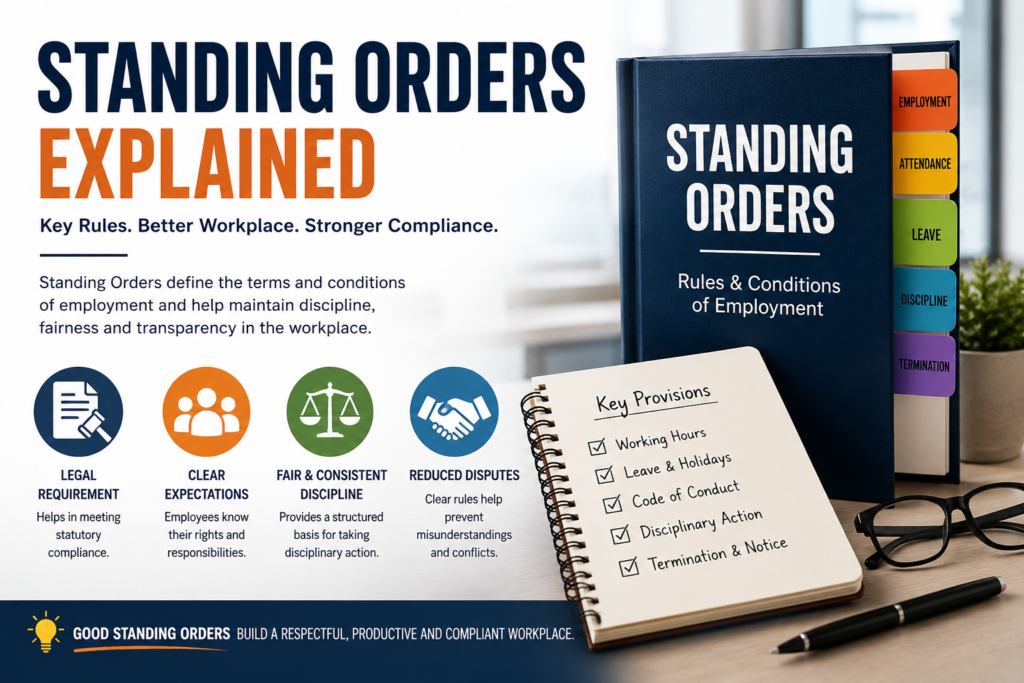
Standing Orders are an important part of employment compliance in India. They help employers clearly define the terms and conditions of employment and ensure that employees understand the rules applicable to their workplace.
For HR teams and employers, having properly drafted and implemented Standing Orders can reduce confusion, improve workplace discipline, and help prevent employment-related disputes.
What Are Standing Orders?
Standing Orders are written rules that define the conditions of employment for workers in an industrial establishment.
They generally cover matters such as:
- Classification of workers
- Working hours and shifts
- Attendance and late coming
- Leave and holidays
- Wage-related procedures
- Misconduct and disciplinary action
- Suspension and termination
- Grievance-related matters
- Conditions for termination or dismissal
- Other workplace rules and procedures
In simple terms, Standing Orders tell employees what is expected from them and what workplace rules they must follow.
Why Are Standing Orders Ihttps://vpassociatess.in/mportant?
A workplace without clearly defined employment rules can face misunderstandings between management and employees.
Proper Standing Orders can help by:
1. Creating Clear Workplace Rules
Employees know the rules regarding attendance, leave, discipline, working hours, and other employment conditions.
2. Supporting Consistent Disciplinary Action
When misconduct occurs, clearly documented rules can provide a structured basis for taking appropriate disciplinary action.
3. Reducing Workplace Disputes
Clear employment conditions can reduce disagreements arising from misunderstandings about workplace policies.
4. Improving HR Administration
HR departments can use established rules as a reference when handling attendance, leave, disciplinary matters, and other employment issues.
What Do Standing Orders https://vpassociatess.in/Usually Cover?
Depending on the establishment and applicable legal framework, Standing Orders may address several important areas.
Classification of Employees
Employees may be classified into categories such as permanent, temporary, probationers, apprentices, or other applicable categories.
Attendance and Working Hours
Rules may specify reporting times, shifts, attendance requirements, late coming, and procedures for absence.
Leave
The rules can explain how employees should apply for leave, obtain approval, and deal with unauthorized absence.
Misconduct
Standing Orders can identify acts that may amount to misconduct and establish the disciplinary process that may follow.
Suspension and Disciplinary Proceedings
They may provide procedures concerning suspension, domestic enquiries, and disciplinary action.
Termination and Notice
Applicable rules may specify conditions and procedures relating to termination of employment and notice requirements.
Standing Orders and the https://vpassociatess.in/Changing Labour Law Framework
India’s labour law framework has undergone significant changes with the introduction of the four Labour Codes.
The Industrial Relations Code, 2020 is particularly relevant to matters concerning standing orders. However, employers should not assume that the same requirements apply to every establishment. Applicability can depend on factors such as the nature of the establishment, number of workers, and the legal provisions currently in force.
Therefore, businesses should review their existing employment documentation and compliance practices in light of the applicable law and its implementation status.
Common Mistakes Employers Should Avoid
Some businesses treat Standing Orders as just another HR document. That can create compliance and operational problems.
Common mistakes include:
- Using outdated Standing Orders
- Failing to review applicability
- Not properly communicating workplace rules
- Keeping employment policies inconsistent with applicable law
- Taking disciplinary action without following the prescribed procedure
- Maintaining incomplete employee documentation
- Ignoring changes in labour legislation
How Can Employers Stay Compliant?
Employers should periodically review their employment rules and documentation.
A practical approach includes:
- Determine whether Standing Orders requirements apply to the establishment.
- Review existing Standing Orders and employment policies.
- Check them against the applicable legal framework.
- Identify gaps or outdated provisions.
- Update documentation where required.
- Ensure employees and HR personnel understand the applicable rules.
- Follow the prescribed procedure before taking disciplinary action.
Final Thoughts
Standing Orders are more than a collection of workplace rules. They provide a structured framework for managing employment conditions, workplace discipline, and employee-management relationships.
For employers and HR professionals, regularly reviewing Standing Orders and related employment documentation can help improve compliance and reduce avoidable workplace disputes.
Need help reviewing your Standing Orders and labour law compliance? Consult a professional labour law and HR compliance consultant to understand the requirements applicable to your establishment.
Leave a Reply