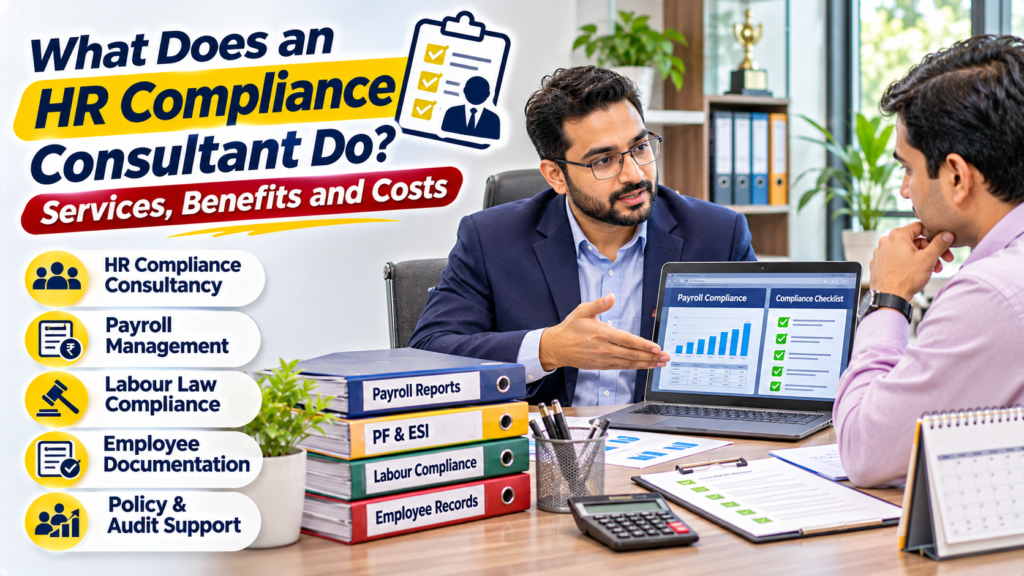
Managing employees involves more than hiring, salary processing, and maintaining attendance records. Every business must also handle several employment-related legal responsibilities, including statutory registrations, payroll deductions, employee documentation, labour law requirements, and periodic compliance filings. As a company grows, managing these responsibilities internally can become increasingly complicated.
This is where an HR compliance consultant in India can help. An HR compliance consultant assists businesses in understanding applicable employment laws, organising statutory documentation, managing compliance activities, and identifying potential gaps in their existing HR processes.
For startups, small businesses, manufacturing units, and established companies, professional compliance support can make routine HR administration more organised. It can also help business owners focus on their operations while ensuring that important employment-related responsibilities receive proper attention.
However, companies should understand what an HR compliance consultant actually does, which services may be included, how outsourcing works, and what factors influence the cost.
This guide explains the role of an HR compliance consultant, the services businesses can consider, the benefits of professional assistance, and how to evaluate consultancy fees.
What Is an HR Compliance Consultant?
An HR compliance consultant is a professional who helps businesses manage employment-related statutory and regulatory responsibilities.
Their work generally involves reviewing the company’s HR processes, identifying applicable labour law requirements, maintaining compliance records, supporting payroll-related statutory activities, and helping employers complete required filings.
The exact scope depends on the consultant’s qualifications, experience, service agreement, and the legal requirements applicable to the business.
An HR compliance consultant may assist with areas such as:
- Provident Fund (PF) compliance.
- Employees’ State Insurance (ESI) compliance.
- Payroll compliance and statutory deductions.
- Minimum wages and wage-related requirements.
- Employee appointment and documentation.
- Attendance and leave records.
- Labour law registrations and licences.
- Statutory registers and returns.
- Professional tax compliance, where applicable.
- Salary-related TDS coordination.
- Workplace policy documentation.
- HR compliance reviews and audits.
- Labour law-related guidance.
Some consultants provide advisory services, while others also handle routine documentation, payroll coordination, and statutory filing support.
Businesses should confirm the exact services included before appointing a consultant.
What Does an HR Compliance Consultant Do?
The primary responsibility of an HR compliance consultant is to help employers understand and manage their applicable HR and labour law obligations.
The work may begin with an assessment of the company’s existing HR practices and continue through regular compliance monitoring.
1. Reviews the Company’s Compliance Requirements
Every business has different compliance responsibilities. A manufacturing unit may have requirements that do not apply to a small office, while a company operating across multiple states may need to consider different state-specific rules.
An HR compliance consultant generally reviews:
- Nature of business activities.
- Type of establishment.
- Number of employees.
- Employee categories and salary structures.
- Applicable statutory registrations.
- Existing HR policies and records.
- Current payroll practices.
- Contractor and outsourced workforce arrangements.
- Applicable Central and State labour requirements.
Based on this information, the consultant can help prepare a list of relevant compliance activities.
2. Assists With PF and ESI Compliance
Provident Fund and Employees’ State Insurance are important areas of statutory compliance for eligible employees and covered establishments.
An HR statutory compliance consultant may assist with:
PF-related activities:
- Reviewing establishment coverage.
- Supporting employee registration and UAN-related processes.
- Checking employee eligibility.
- Reviewing applicable contribution calculations.
- Preparing or verifying monthly contribution information.
- Supporting ECR filing.
- Reconciling payroll and PF records.
- Maintaining challans and payment acknowledgements.
ESI-related activities:
- Reviewing establishment and employee coverage.
- Supporting employee registration.
- Checking applicable wage calculations.
- Reviewing contribution details.
- Updating employee joining and exit information.
- Supporting contribution filing and payment.
- Maintaining relevant records.
The consultant should work according to applicable eligibility conditions, wage limits, statutory rates, and government notifications.
3. Supports Payroll Compliance
Payroll management involves several responsibilities beyond calculating monthly salaries.
A payroll compliance consultant may help businesses review salary structures, statutory deductions, employee contributions, and payroll documentation.
Typical activities include:
- Reviewing employee salary details.
- Verifying attendance-based salary calculations.
- Checking applicable statutory deductions.
- Reviewing PF and ESI calculations.
- Coordinating salary TDS information.
- Checking minimum wage compliance.
- Preparing payroll summaries.
- Reviewing salary slips.
- Reconciling payroll data with statutory records.
Accurate payroll information is important because errors can affect employee payments, statutory contributions, and financial records.
Companies should also establish a clear process for approving salary changes, reimbursements, incentives, and other payroll adjustments.
4. Manages Employee Documentation
Proper employee documentation helps businesses maintain organised employment records and respond to statutory or internal verification requirements.
An HR compliance consultant may assist with preparing, reviewing, or organising documents such as:
- Appointment letters.
- Employment agreements.
- Employee information forms.
- Job descriptions.
- Salary structure documents.
- Employee declarations.
- Nomination forms.
- Leave records.
- Attendance records.
- Promotion and transfer letters.
- Resignation documentation.
- Full and final settlement records.
- Experience and relieving letters.
This process is often referred to as employee documentation management.
The consultant may also help businesses identify missing or outdated documents and establish a consistent employee record-maintenance process.
5. Provides Labour Law Compliance Guidance
Labour laws cover several aspects of the employer-employee relationship, including wages, working hours, social security, workplace safety, and employee welfare.
An HR compliance consultant can help employers identify which requirements apply to their establishment.
Depending on the business, this may involve guidance related to:
- Applicable wage and payment requirements.
- Working hours and overtime.
- Weekly rest and holidays.
- Leave administration.
- Bonus obligations.
- Gratuity provisions.
- Maternity-related benefits.
- Workplace safety requirements.
- Contract labour compliance.
- Factory and establishment requirements.
- Prevention of sexual harassment at the workplace.
The consultant may also help businesses review changes in applicable laws and update internal procedures accordingly.
6. Assists With Registrations, Returns, and Statutory Filings
Certain establishments must obtain registrations, maintain prescribed records, and submit periodic statutory returns.
An HR compliance consultant may help identify the applicable registrations and filing responsibilities.
Depending on the engagement, support may include:
- Reviewing registration requirements.
- Assisting with application documentation.
- Preparing statutory information.
- Coordinating online submissions.
- Checking filing deadlines.
- Maintaining acknowledgement receipts.
- Tracking pending compliance activities.
- Organising supporting documents.
The employer remains responsible for ensuring that information submitted on its behalf is accurate and that statutory obligations are fulfilled.
7. Conducts HR Compliance Reviews and Audits
An HR compliance review helps a company understand whether its existing processes are aligned with applicable requirements.
A consultant may examine payroll records, employee documents, statutory challans, attendance information, registrations, and filing acknowledgements.
The review may identify:
- Missing employee documents.
- Incorrect payroll calculations.
- Delayed statutory payments.
- Incomplete records.
- Outdated HR policies.
- Missing registrations.
- Inconsistent employee information.
- Pending returns or filings.
After identifying gaps, the consultant can provide recommendations and help the company prepare a corrective action plan.
What Are the Main HR Consultancy Services in India?
Businesses can choose from different HR consultancy services in India, depending on their internal resources and operational requirements.
Not every company needs complete HR outsourcing. Some may only require assistance with statutory compliance, while others may need support with payroll and employee administration.
Here are some common service categories.
1. HR Statutory Compliance Services
These services focus on identifying and managing applicable employment-related legal obligations.
They may include PF, ESI, labour law documentation, statutory registers, returns, and compliance calendar management.
2. Payroll Compliance Services
Payroll-related services help companies maintain accurate salary records and manage applicable statutory deductions.
These services may include payroll calculations, salary slips, contribution reconciliation, and tax-related payroll coordination.
3. Employee Documentation Management
This service focuses on preparing, organising, updating, and maintaining employee records.
It can be useful for businesses that have incomplete documentation or do not have a structured HR record-management system.
4. Labour Law Consultancy
Labour law consultancy involves guidance on employment-related legal requirements and their practical application to business operations.
Depending on the consultant’s expertise and engagement, businesses may receive support with wage requirements, employee benefits, working conditions, registrations, and statutory responsibilities.
5. HR Outsourcing Services
Some businesses prefer to outsource selected HR activities rather than manage everything internally.
HR outsourcing services may include:
- Payroll administration.
- Employee record maintenance.
- Attendance management.
- Leave administration.
- Statutory compliance coordination.
- HR documentation.
- Recruitment administration.
- Employee joining and exit formalities.
The scope of outsourcing should be clearly defined in the service agreement.
Benefits of Hiring an HR Compliance Consultant
Working with an experienced consultant can help businesses manage HR responsibilities more systematically.
The following are some potential benefits.
1. Better Understanding of Legal Requirements
Employment-related compliance involves multiple laws, notifications, thresholds, and filing procedures.
A consultant can help employers understand which requirements are relevant to their business and what actions need to be completed.
This is particularly useful for companies without a dedicated internal compliance team.
2. Improved Documentation Management
Incomplete or outdated employee records can create problems during inspections, audits, and employee-related disputes.
A consultant can help establish a structured documentation process and identify missing information.
3. More Organised Payroll Processes
Payroll involves coordination between HR, finance, and management.
Professional payroll compliance support can help improve the accuracy of salary calculations, statutory deductions, and contribution records.
4. Better Deadline Management
Statutory payments and filings often have specific due dates.
A consultant can help prepare a compliance calendar, track upcoming deadlines, and remind the responsible team about pending activities.
However, companies should maintain their own internal monitoring process instead of relying entirely on an external service provider.
5. Support During Compliance Reviews
When a business needs to review its employment records or prepare for an inspection, organised documentation can save time.
An HR compliance consultant may help arrange relevant records, identify gaps, and coordinate the preparation of required information.
6. Flexible Support for Growing Businesses
As employee strength increases, HR administration often becomes more demanding.
Outsourcing selected activities can help businesses manage additional responsibilities without immediately building a large internal HR department.
7. More Time for Core Business Activities
Business owners and managers often spend considerable time handling payroll queries, employee documents, and compliance-related tasks.
Professional support can reduce some of this administrative workload, allowing internal teams to focus on business operations and employee management.
How Much Do HR Compliance Consultant Fees Cost in India?
One of the common questions businesses ask is: How much does an HR compliance consultant charge?
There is no single standard fee for every company. HR compliance consultant fees depend on the number of employees, nature of business, services required, number of locations, and complexity of applicable compliance obligations.
A small office requiring basic payroll and statutory support may have different requirements from a manufacturing company with multiple employee categories and contractor arrangements.
Factors That Affect HR Compliance Consultant Fees
1. Number of Employees
Employee strength directly affects the volume of payroll processing, employee documentation, statutory calculations, and record maintenance.
A company with 15 employees may require a different level of support compared with an organisation employing 300 people.
2. Type of Services Required
The fee depends on whether the company needs only compliance guidance or a broader service package.
For example:
- Basic HR compliance consultation.
- PF and ESI compliance support.
- Monthly payroll processing.
- Employee documentation management.
- Labour law compliance review.
- Complete HR outsourcing.
Each service involves different responsibilities and working hours.
3. Nature of Business
Manufacturing units, factories, offices, retail businesses, and service companies may have different compliance requirements.
Industrial establishments may need additional support relating to workplace safety, working conditions, contractors, and establishment-specific obligations.
4. Number of Business Locations
Companies operating across multiple cities or states may require additional coordination.
Different locations can involve separate registrations, state-specific rules, and location-wise employee records.
5. Existing Compliance Status
If a company already maintains organised employee records and has completed its registrations, ongoing compliance support may be relatively straightforward.
However, businesses with missing documents, pending filings, incorrect payroll records, or unresolved compliance gaps may require an initial review and corrective work.
Common HR Consultancy Pricing Models
Consultants may structure their fees in different ways:
| Pricing Model | Suitable For |
|---|---|
| Monthly Retainer | Businesses requiring ongoing HR and compliance support |
| Per Employee Pricing | Companies needing payroll or employee-level administration |
| One-Time Consultation | Businesses requiring guidance on a specific compliance issue |
| Compliance Audit Fee | Companies reviewing existing HR and statutory records |
| Project-Based Fee | Businesses requiring registrations, documentation, or corrective compliance work |
Before comparing quotations, companies should ask what is included in the fee and whether additional charges apply for registrations, government fees, legal opinions, inspections, or special assignments.
A transparent service agreement helps avoid misunderstandings.
How to Choose the Right HR Compliance Consultant in India
Selecting a consultant is an important business decision because HR compliance involves employee information, financial records, and legal responsibilities.
Businesses should evaluate the following factors before finalising a service provider.
1. Relevant Experience
Check whether the consultant has experience working with businesses similar to yours.
For example, a manufacturing company may prefer a consultant familiar with factory-related and contractor compliance requirements.
2. Knowledge of Applicable Labour Laws
The consultant should understand relevant Central and State employment requirements and know how to identify obligations applicable to different establishments.
3. Clear Service Scope
Ask for a written description of the services included in the engagement.
It should specify whether the consultant will handle calculations, filing preparation, portal submissions, employee documentation, follow-ups, and compliance reporting.
4. Communication and Reporting
Regular communication is important.
Ask how the consultant will share filing updates, payment acknowledgements, pending activities, and compliance reports.
5. Data Confidentiality
Payroll and employee records contain sensitive personal and financial information.
Check how the consultant stores, accesses, shares, and protects these records.
6. Transparent Fees
Compare quotations based on the actual services offered rather than selecting a consultant only because the fee is lower.
7. Defined Responsibility
Understand which activities will be handled by the consultant and which responsibilities will remain with the employer.
The business should retain appropriate oversight of statutory payments, employee information, and final submissions.
When Should a Business Hire an HR Compliance Consultant?
Not every company needs the same level of external assistance. However, professional support may be particularly useful in certain situations.
Consider hiring an HR compliance consultant when:
- Your business is hiring employees for the first time.
- Your employee strength is increasing.
- Payroll errors are occurring regularly.
- PF or ESI compliance is becoming difficult to manage.
- Employee records are incomplete.
- Your company operates in multiple locations.
- You are unsure about applicable labour law requirements.
- Your business is preparing for an HR compliance audit.
- Your internal HR team needs additional statutory support.
- You want to outsource payroll or selected HR activities.
For startups and small businesses, an initial compliance review can help establish a structured process before employee strength increases.
Established organisations may benefit from periodic audits and ongoing compliance monitoring.
HR Compliance Consulting for Businesses in Sonipat and Nearby Industrial Areas
Businesses operating in Sonipat and surrounding industrial locations may have different HR and labour law requirements depending on their workforce, business activities, and establishment category.
Companies in Rai Industrial Area, Kundli Industrial Area, Barhi Industrial Area, IMT Kharkhoda, and Murthal Industrial Area may need to manage employee documentation, payroll compliance, contractor-related records, statutory contributions, and workplace requirements.
Commercial establishments in Model Town Sonipat, Sector 7, Sector 8, Sector 12, Sector 14, Sector 15, Sector 23, Sector 27, and Sector 30 may also require assistance with payroll administration and employee-related compliance.
Businesses operating around Atlas Road, Subhash Chowk, Geeta Bhawan Chowk, Railway Road, Kakroi Road, Gohana Road, and Murthal Road should identify their applicable establishment and employment-related obligations.
Companies from Murthal, Ganaur, Gohana, Kharkhoda, Nahra, Nahri, Rathdhana, Kami, Kakroi, Bajana Kalan, Tajpur, Pipli Khera, Purkhas, Ridhau, Rai Village, Jakhauli, Khewra, Sisana, Garhi Sisana, Rohna, Farmana, Jataula, Jharaut, Kundal, Kundli, Rasoi, Liwana, Patti Kalan, Jatheri, and Bainapur may also explore professional compliance support according to their operational needs.
Businesses with operations in Panipat, Bahadurgarh, and Delhi NCR should additionally review location-specific requirements where applicable.
V.P. Associates can be approached by businesses seeking information about corporate compliance and labour law-related assistance. Companies should directly confirm the specific HR compliance services available, the scope of professional support, and the applicable consultancy fees before proceeding.
Questions to Ask Before Hiring an HR Compliance Consultant
Before signing an agreement, businesses should discuss the following questions:
- Which HR compliance services are included in your package?
- Do you provide PF and ESI compliance support?
- Can you assist with monthly payroll processing?
- Do you manage employee documentation?
- Can you help identify applicable labour law requirements?
- Do you support statutory registrations and filings?
- How do you track monthly and annual compliance deadlines?
- Will you provide filing acknowledgements and payment records?
- How do you protect confidential employee information?
- What are your monthly or project-based consultancy fees?
- Are government charges and additional services included in the quotation?
- Who will be responsible for reviewing and approving final submissions?
These questions help businesses understand the consultant’s capabilities and establish clear expectations before beginning the engagement.
Conclusion
An HR compliance consultant plays an important role in helping businesses manage employment-related statutory responsibilities, payroll processes, employee documentation, and labour law requirements.
From PF and ESI compliance to payroll reviews, employee records, statutory filings, and HR audits, professional support can help companies organise their compliance activities and identify potential gaps.
The cost of hiring a consultant depends on employee strength, business operations, service requirements, and the complexity of applicable laws. Therefore, businesses should compare service scope, experience, communication, confidentiality practices, and pricing before making a decision.
Whether your company operates in Sonipat, Rai Industrial Area, Kundli Industrial Area, Barhi Industrial Area, IMT Kharkhoda, Murthal, Ganaur, Gohana, or nearby locations, a structured HR compliance process can support more organised business operations.
If managing employee-related statutory responsibilities is becoming difficult, consider discussing your requirements with a qualified HR compliance consultant in India. The right professional support can help your business maintain better documentation, monitor important deadlines, and manage HR compliance responsibilities more effectively.
Disclaimer: This article provides general information about HR compliance consulting in India. Actual legal obligations, registrations, thresholds, filing procedures, and deadlines depend on applicable laws, notifications, and the nature of the establishment. Businesses should verify current requirements and seek appropriate professional advice before taking compliance decisions.
Leave a Reply