Introduction
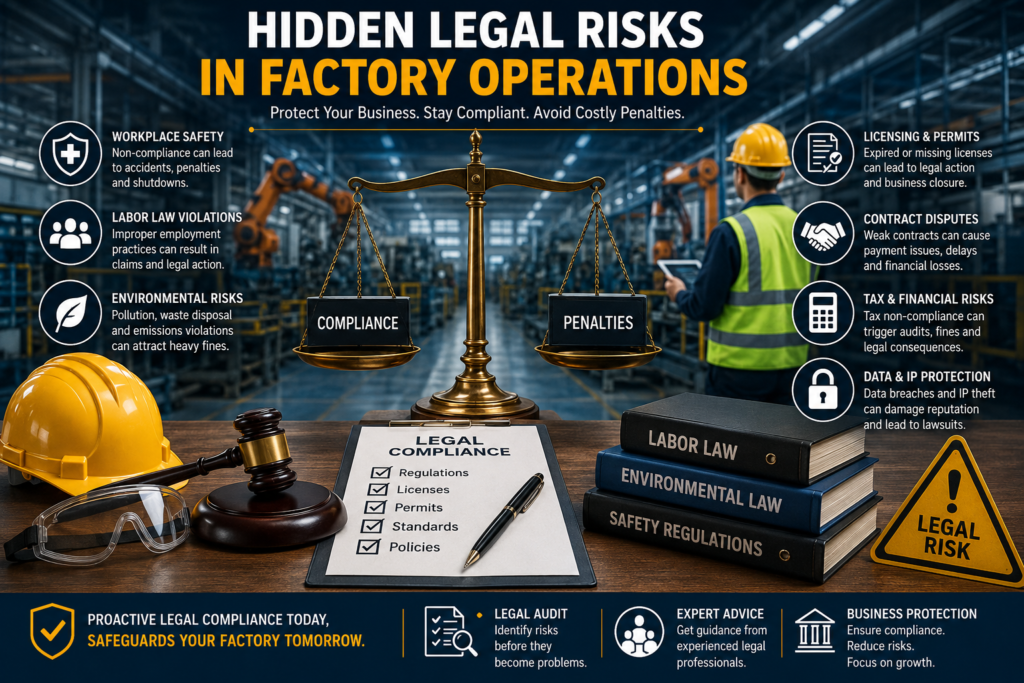
Running a factory involves far more than maintaining production schedules and managing employees. Behind every successful manufacturing operation lies a complex legal framework that governs workplace safety, environmental compliance, labor practices, contracts, taxation, and regulatory approvals. Unfortunately, many factory owners focus primarily on operational efficiency while overlooking the hidden legal risks in factory opehttps://vpassociatess.in/rations that can lead to significant financial losses, regulatory penalties, litigation, or even business closure.
Understanding these legal challenges is essential for protecting your business, reputation, and long-term growth. This guide explores the most common yet overlooked legal risks affecting manufacturing businesses and explains how proactive legal compliance can safeguard your factory.
Why Hidden Leghttps://vpassociatess.in/al Risks in Factory Operations Matter
Manufacturing businesses operate under multiple laws and regulations simultaneously. A single compliance failure can trigger investigations from multiple government authorities, resulting in heavy fines, production stoppages, or criminal liability.
Ignoring hidden legal risks in factory operations may result in:
- Expensive legal disputes
- Government penalties
- Factory shutdown orders
- Loss of business licenses
- Employee compensation claims
- Environmental litigation
- Contractual disputes with suppliers or customers
Proactive legal planning significantly reduces these risks while improving operational stability.
Workplace Safehttps://vpassociatess.in/ty Compliance Risks
What Happens When Safety Regulations Are Ignored?
Occupational safety violations remain one of the leading causes of legal action against factories.
Common issues include:
- Lack of safety equipment
- Improper machine maintenance
- Missing emergency procedures
- Inadequate employee training
- Unsafe chemical handling
Failure to comply with workplace safety laws can expose factory owners to compensation claims, criminal prosecution, and regulatory penalties.
Labour Lahttps://vpassociatess.in/w Violations
Are Your Employment Practices Fully Compliant?
Employment-related disputes frequently arise due to:
- Incorrect employment contracts
- Wage and overtime violations
- Illegal termination
- Improper contractor classification
- Non-compliance with employee benefits
Factory owners should regularly review HR policies to ensure compliance with labor legislation and avoid costly disputes.
Environmental Compliance Risks
Could Environmental Violations Shut Down Your Factory?
Environmental regulations continue to become stricter across manufacturing industries.
Common compliance failures include:
- Improper waste disposal
- Air pollution violations
- Water contamination
- Hazardous material storage
- Noise pollution
Environmental litigation can result in substantial financial penalties and long-term reputational damage.
Licensing and Reghttps://vpassociatess.in/ulatory Approval Risks
Many factories unknowingly operate with:
- Expired licenses
- Missing regulatory approvals
- Incomplete statutory registrations
- Non-renewed permits
Failure to maintain valid documentation can lead to immediate suspension of operations.
Regular legal audits help identify compliance gaps before regulators do.
Contract Risks with Suppliers and Customers
Are Your Manufacturing Contracts Legally Strong?
Weak contracts expose factories to disputes involving:
- Delayed deliveries
- Product quality claims
- Payment defaults
- Intellectual property ownership
- Confidentiality breaches
Professionally drafted agreements reduce business uncertainty while protecting commercial interests.
Tax and Financial Compliance
Manufacturing businesses often face legal issues related to:
- GST compliance
- Corporate taxation
- Transfer pricing
- Record keeping
- Financial reporting
Tax investigations frequently uncover additional regulatory violations, increasing legal exposure.
Intellectual Property Risks
Many factories develop proprietary processes, product designs, or manufacturing techniques.
Without legal protection:
- Competitors may copy innovations.
- Trade secrets may be lost.
- Brand value may decline.
- Patent opportunities may disappear.
Proper intellectual property protection strengthens competitive advantage.
Data Protection and Cybersecurity Compliance
Modern factories increasingly rely on:
- ERP software
- IoT devices
- Cloud platforms
- Employee databases
- Customer information
Data breaches may trigger legal liabilities under applicable privacy and cybersecurity laws.
Supply Chain Legal Risks
Can Your Suppliers Create Legal Problems for You?
Third-party suppliers can expose manufacturers to legal liability through:
- Non-compliant raw materials
- Labor law violations
- Environmental misconduct
- Contract breaches
- Product defects
Vendor due diligence and legally enforceable agreements help reduce these risks.
Product Liability Risks
Manufacturers may be held legally responsible when products:
- Cause injuries
- Fail safety standards
- Contain manufacturing defects
- Lack proper labeling
- Do not meet regulatory specifications
Robust quality control combined with legal compliance significantly minimizes product liability exposure.
Why Regular Legal Audits Are Essential
A comprehensive legal audit identifies hidden compliance issues before they escalate into expensive disputes.
Legal audits typically review:
- Employment documentation
- Regulatory licenses
- Environmental compliance
- Contract management
- Tax obligations
- Corporate governance
- Risk management systems
Periodic legal reviews help factories remain compliant while supporting sustainable business growth.
How Legal Professionals Help Factory Owners
Experienced legal advisors assist manufacturers by:
- Conducting compliance audits
- Drafting commercial contracts
- Managing labor disputes
- Handling regulatory investigations
- Advising on environmental laws
- Protecting intellectual property
- Reducing litigation risks
Professional legal guidance allows factory owners to focus on production while minimizing legal uncertainty.
Conclusion
The hidden legal risks in factory operations often remain unnoticed until they become expensive legal problems. From labor law compliance and workplace safety to environmental regulations, taxation, contracts, and intellectual property, manufacturers must adopt a proactive legal strategy.
Investing in regular legal audits and expert legal advice not only protects your factory from regulatory action but also strengthens operational efficiency, investor confidence, and long-term business success.
If you operate a manufacturing business, consulting experienced legal professionals today can help identify risks before they become costly liabilities.
Leave a Reply