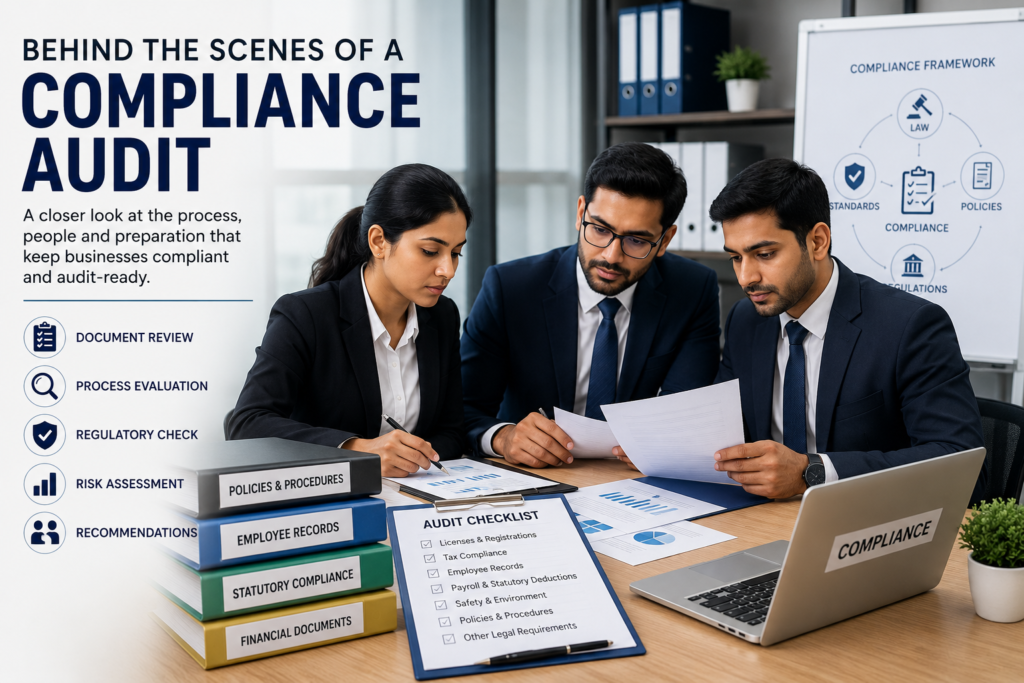
For many business owners, the words “compliance audit” create anxiety. Questions like “Will we pass?”, “What if documents are missing?”, or “Will this affect our business?” are common.
The reality is that a compliance audit isn’t designed to catch businesses off guard—it’s meant to verify that your organization is following applicable laws, regulations, and internal policies. A well-prepared business can complete an audit smoothly with minimal disruption.
In this blog, we’ll take you behind the scenes of a compliance audit, explain what auditors actually look for, and share practical tips to help your business stay audit-ready.
What Is a Compliance Audit?
A compliance audit is a systematic review of your https://vpassociatess.in/business operations, records, and processes to ensure they comply with relevant legal and regulatory requirements.
Depending on your industry, this may include:
- Labour law compliance
- GST and tax compliance
- Factory and workplace safety regulations
- Environmental regulations
- Company law requirements
- Employee documentation
- Licenses and statutory registrations
The objective is to identify compliance gaps before they become legal or financial problems.
What Happens Before the Audit?
Preparation begins long before the auditor arrives.
Typically, the auditor will:
- Review the scope of the audit
- Request preliminary documents
- Understand your business processes
- Create an audit checklist
- Schedule meetings with relevant departments
Businesses that organize their records beforehand often experience a much smoother audit process.
Documents Auditors Usually Review
Although requirements differ by industry, auditors commonly examine:
- Business registrations and licenses
- GST and tax filings
- Employee records
- Payroll documents
- Attendance registers
- PF and ESI records
- Safety inspection reports
- Vendor agreements
- Internal policies
- Financial records
Missing or outdated documents often become the biggest audit concern.
Behind the Scenes: What Auditors Actually Look For
Many people think auditors only search for mistakes.
In reality, auditors focus on whether your compliance system is reliable and consistently followed.
They evaluate:
1. Documentation Accuracy
Every important activity should have proper documentation.
If a process exists but isn’t documented, proving compliance becomes difficult.
2. Process Consistency
Auditors compare written policies with actual business practices.
For example:
- Are employees following company policies?
- Are safety procedures implemented daily?
- Are statutory filings completed on time?
Consistency is just as important as documentation.
3. Legal Compliance
Auditors verify whether your business complies with applicable laws and regulations.
Examples include:
- Labour laws
- Tax laws
- Factory regulations
- Environmental norms
- Corporate compliance requirements
Common Compliance Mistakes Businesses Make
Many audit observations result from small but repeated errors, such as:
- Expired licenses
- Missing employee records
- Late statutory filings
- Incorrect payroll calculations
- Poor document organization
- Incomplete attendance registers
- Outdated HR policies
- Missing safety training records
Most of these issues are preventable with regular compliance reviews.
How Employees Participate in an Audit
Compliance audits are not limited to management.
Auditors may interact with:
- HR teams
- Accounts departments
- Factory supervisors
- Safety officers
- Operations managers
Employees may be asked to explain routine procedures or demonstrate how specific compliance activities are carried out.
Training staff before an audit helps avoid confusion and inconsistent responses.
How Long Does a Compliance Audit Take?
The duration depends on:
- Business size
- Number of locations
- Industry regulations
- Scope of the audit
- Availability of records
Small businesses may complete an audit within a day, while larger organizations may require several days or even weeks.
What Happens After the Audit?
After reviewing the evidence, https://vpassociatess.in/auditors usually prepare an audit report that includes:
- Areas of compliance
- Observations
- Non-compliance findings
- Risk levels
- Recommended corrective actions
- Improvement opportunities
Businesses are generally given time to address identified gaps before follow-up reviews, depending on the audit type.
Tips to Stay Audit-Ready All Year
Instead of preparing only when an audit is announced, businesses should build compliance into everyday operations.
Best practices include:
- Maintain updated records.
- Conduct internal compliance reviews regularly.
- Track license renewal dates.
- File statutory returns on time.
- Train employees on compliance procedures.
- Store documents digitally with proper backups.
- Keep compliance responsibilities clearly assigned.
Being audit-ready throughout the year reduces stress and improves operational efficiency.
Why Compliance Audits Benefit Your Business
A successful compliance audit can provide benefits beyond regulatory compliance:
- Reduces legal risks
- Prevents financial penalties
- Improves operational discipline
- Builds trust with clients and stakeholders
- Strengthens business reputation
- Identifies process improvement opportunities
- Supports sustainable business growth
Rather than viewing audits as an obligation, businesses should see them as a valuable opportunity to improve internal systems.
Conclusion
A compliance audit is much more than a document inspection. It provides a complete picture of how effectively your organization follows legal requirements and internal processes.
Businesses that maintain accurate records, educate employees, and perform regular internal compliance checks are far better positioned for successful audits. By adopting a proactive approach, compliance becomes a competitive advantage instead of a last-minute challenge.
Investing in strong compliance practices today can save your business from costly legal issues, operational disruptions, and reputational damage in the future.
Leave a Reply