For every company registered in India, maintaining accurate and timely corporate records is essential. One of the important annual compliance requirements is Director KYC (Know Your Customer). Directors of companies and designated partners of LLPs may need to complete their KYC requirements within the prescribed timelines.
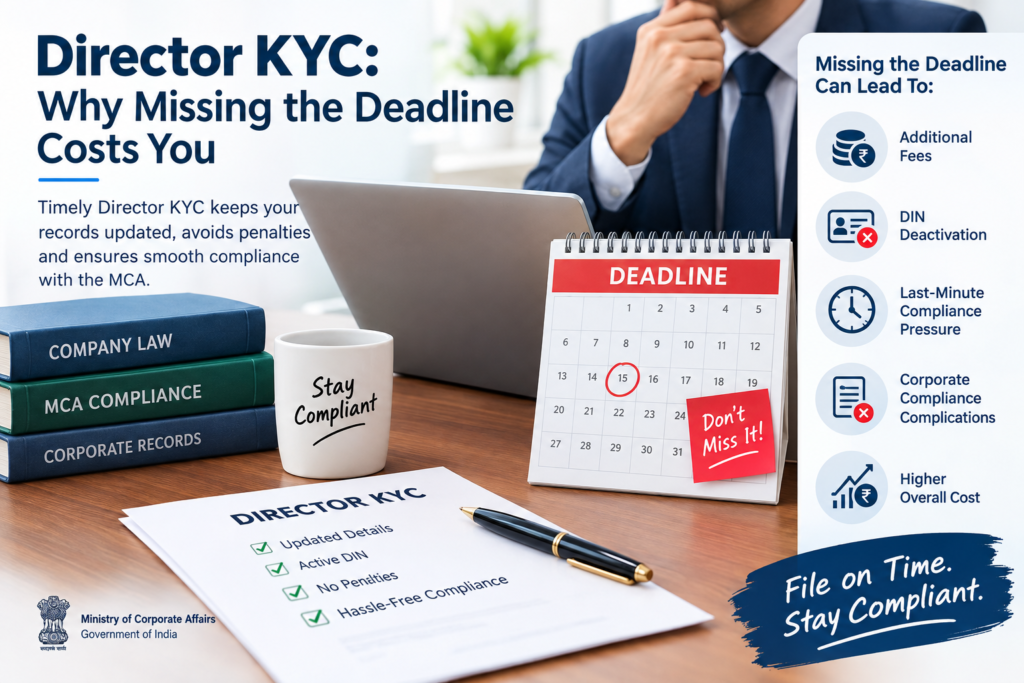
Many businesses treat Director KYC as a routine formality and postpone it until the last moment. However, missing the deadline can lead to additional fees, deactivation of the DIN, compliance complications, and unnecessary administrative work.
What Is Director KYC?
Director KYC is a compliance process through which the Ministry of Corporate Affairs (MCA) verifies and updates information related to individuals holding a Director Identification Number (DIN).
The process helps ensure that details such as:
- Name and personal information
- PAN and other identification details
- Residential address
- Email address and mobile number
- Digital verification and authentication
remain accurate in MCA records.
Depending on the applicable rules and the director’s circumstances, the KYC requirement may be fulfilled through the applicable MCA form or process.
Why Is Director KYC Important?
Director KYC is not simply another annual paperwork exercise. It helps maintain the authenticity and accuracy of India’s corporate database.
For companies, timely compliance can help:
- Keep director records updated
- Avoid unnecessary additional fees
- Prevent DIN-related complications
- Maintain better corporate compliance records
- Reduce the risk of last-minute filing problems
A small compliance task can become a bigger issue when it is repeatedly ignored.
What Happens If You Miss the Deadline?
One of the biggest reasons to complete Director KYC on time is the financial and compliance impact of delay.
1. Additional Fees
Late filing may attract additional fees as prescribed by MCA. What could have been a routine compliance filing can therefore become more expensive simply because it was delayed.
2. DIN May Become Deactivated
Failure to complete the applicable KYC requirement within the prescribed period can result in the DIN being marked as deactivated due to non-filing of DIR-3 KYC, subject to the applicable MCA rules and status.
This can create complications for a director when carrying out activities requiring an active DIN.
3. Last-Minute https://vpassociatess.in/Compliance Pressure
Waiting until the deadline can create avoidable stress. Problems such as outdated contact information, mismatched details, expired digital signatures, or authentication issues may take additional time to resolve.
4. Corporate Compliance Can Get Complicated
A director’s compliance status is connected to the broader compliance framework of the company. An unresolved KYC issue can create additional administrative work for the company and its professionals.
5. Small Delay, Bigger Cost
The real cost of missing a deadline is not always just the additional government fee. It can also include professional assistance, time spent correcting information, resolving technical issues, and dealing with related compliance requirements.
Who Should Pay https://vpassociatess.in/Attention to Director KYC?
Directors holding a DIN should regularly check whether their KYC requirement is applicable and whether it has been completed for the relevant financial year.
Companies should also maintain an internal compliance calendar so that director-related filings are not overlooked.
How to Avoid Missing the Deadline
A simple compliance system can prevent most last-minute problems.
Maintain a compliance calendar: Track Director KYC along with GST, income tax, annual filing, and other applicable deadlines.
Verify information in advance: Check whether the director’s PAN, address, email, mobile number, and other details are accurate.
Keep DSC ready: Where digital authentication is required, make sure the Digital Signature Certificate is valid and functional.
Don’t wait for the last day: Filing early gives you time to fix technical or documentation issues.
Take professional assistance when required: If there is a mismatch, deactivation, or other compliance issue, professional guidance can help avoid unnecessary delays.
Final Takeaway
Director KYC may look like a small compliance requirement, but missing the deadline can turn it into an expensive and time-consuming problem.
The best approach is simple: check the requirement, verify your details, prepare the necessary authentication, and complete the filing within the prescribed timeline.
For businesses, timely compliance isn’t just about avoiding penalties—it’s about keeping corporate records clean, accurate, and up to date.
Note: Director KYC requirements, forms, deadlines, and fees can change through MCA notifications. Always verify the applicable requirements for the relevant year before filing.
Leave a Reply