A Fire NOC (No Objection Certificate) is an important fire-safety compliance requirement for many commercial, industrial, institutional, and residential establishments. It confirms that the premises have met applicable fire-safety requirements and that necessary precautions are in place.
Yet, many businesses face unexpected delays while obtaining or renewing their Fire NOC. These delays can affect project timelines, occupancy, operations, and even regulatory compliance.
So, why do Fire NOC applications get delayed—and what can businesses do to prevent it?
What Is a Fire NOC?
A Fire NOC is generally issued by the relevant fire department or authority after assessing whether a building or premises complies with applicable fire-safety requirements.
Depending on the type and size of the property, requirements may include:
- Fire extinguishers and fire-fighting equipment
- Fire hydrant and sprinkler systems
- Fire alarms and detection systems
- Emergency exits and evacuation routes
- Fire-resistant doors and other safety installations
- Adequate access for fire-fighting vehicles
- Proper electrical and safety arrangements
- Approved building plans and supporting documents
The exact requirements can vary depending on the building, location, use, height, occupancy, and applicable local regulations.
Why Do Fire NOC Applications Get Delayed?
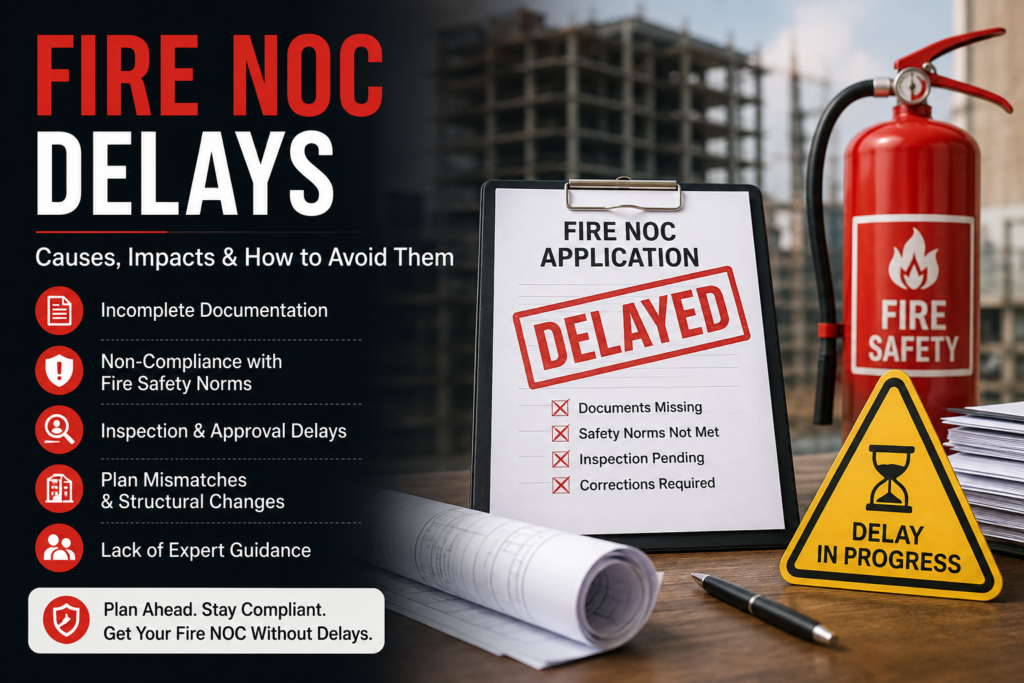
1. Incomplete Documentation
One of the most common reasons for delays is missing or incorrect documentation.
Applications may require building plans, ownership or occupancy documents, fire-safety system details, installation certificates, inspection reports, and other supporting records.
Even a small discrepancy between documents can result in queries or additional submissions.
2. Fire-Safety Systems Are Not Properly Installed
Submitting an application does not guarantee approval.
During inspection, authorities may identify issues such as:
- Insufficient fire extinguishers
- Non-functional fire alarms
- Improper sprinkler installation
- Blocked emergency exits
- Inadequate signage
- Poor fire-fighting access
- Missing emergency lighting
These deficiencies may need to be corrected before the approval process can move forward.
3. Building Plan Mismatch
Another common problem occurs when the actual premises differ from the approved building plan.
Unauthorized modifications, changes in room layouts, additional construction, or altered exits can create compliance concerns.
Before applying for a Fire NOC, businesses should verify that the actual building matches the relevant approved plans and permissions.
4. Delayed Inspections
In some cases, the application may be submitted correctly, but the inspection process takes time.
If the premises are not ready when the inspection takes place, the applicant may have to make corrections and undergo another inspection, extending the overall timeline.
5. Lack of Technical Guidance
Fire-safety compliance involves technical requirements. Businesses unfamiliar with these requirements may install equipment incorrectly or submit incomplete information.
Professional guidance before submission can help identify potential issues early instead of waiting for objections from the authorities.
How Can Businesses Reduce Fire NOC Delays?
Start the Process Early
Don’t wait until the last minute.
If you are constructing, opening, expanding, or modifying a commercial property, consider Fire NOC requirements during the planning stage itself.
Early preparation gives you time to address deficiencies without disrupting your operations.
Conduct a Pre-Inspection
Before the official inspection, conduct an internal fire-safety assessment.
Check:
- Fire extinguishers
- Fire alarms
- Sprinkler and hydrant systems
- Emergency exits
- Fire signage
- Emergency lighting
- Electrical safety
- Fire-fighting access
- Evacuation routes
Finding problems beforehand can significantly reduce avoidable delays.
Keep Documents Organized
Maintain a complete compliance file containing relevant approvals, plans, certificates, equipment records, inspection reports, and other supporting documents.
Ensure that names, addresses, building details, and measurements are consistent across documents.
Don’t Ignore Fire-Safety Maintenance
Installing fire-safety equipment https://vpassociatess.in/once is not enough.
Equipment should be regularly inspected, tested, serviced, and maintained. Proper maintenance records can also help demonstrate ongoing compliance.
What Should You Do If Your Fire NOC Is Already Delayed?
If your Fire NOC application has been delayed, don’t simply keep resubmitting the same documents.
First, identify the exact reason for the delay or objection.
Then:
- Review the inspection observations or department communication.
- Identify each pending compliance requirement.
- Correct technical deficiencies.
- Update or rectify documents where required.
- Arrange necessary testing or certification.
- Submit the required compliance information properly.
- Follow up through the appropriate official channel.
The key is to address the actual reason for the delay, rather than treating every delay as a documentation problem.
https://vpassociatess.in/Fire NOC Compliance Is More Than a Formality
Fire safety is ultimately about protecting lives, property, employees, customers, and emergency responders.
A delayed Fire NOC can sometimes indicate deeper issues with documentation, building compliance, or fire-safety infrastructure. Businesses should therefore treat the process as an opportunity to verify that their premises are genuinely prepared for a fire emergency.
Final Takeaway
Fire NOC delays can be frustrating—but many are https://vpassociatess.in/preventable.
Proper planning, accurate documentation, functional fire-safety systems, regular maintenance, and timely compliance checks can make the approval process smoother.
If your business is planning a new facility, expansion, renovation, or Fire NOC renewal, preparing for compliance before the official inspection can save valuable time and prevent unnecessary complications.
Don’t wait for an objection to discover a compliance gap. Prepare before the inspection.
Leave a Reply