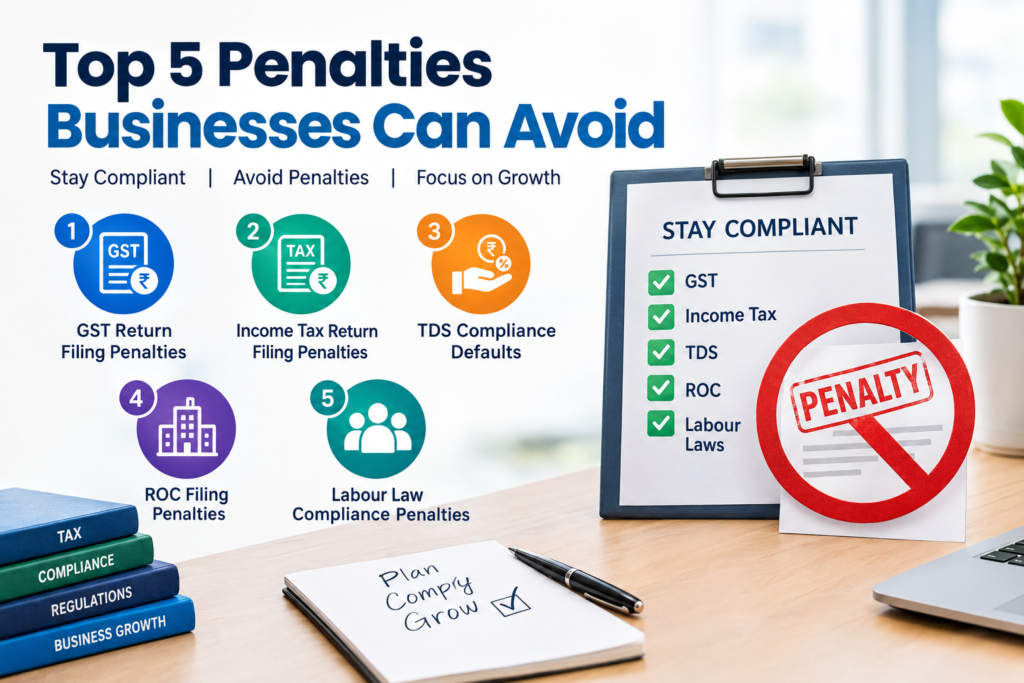
Running a business involves more than managing sales, employees, customers, and finances. Businesses also need to follow various tax, accounting, labour, and regulatory requirements. Missing an important deadline or failing to maintain proper records can result in penalties, interest, notices, and unnecessary financial pressure.
The good news is that many common business penalties can be avoided through timely compliance and proper record-keeping. Here are five penalties that businesses should take seriously.
1. Late GST https://vpassociatess.in/Return Filing Penalties
Businesses registered under GST are required to file applicable GST returns within the prescribed deadlines. Delayed filing can lead to late fees and, depending on the situation, interest on tax liability.
Even when there are no transactions, applicable returns may still need to be filed. Businesses should maintain a compliance calendar and review GST records regularly to reduce the risk of missed filings.
2. Income Tax Return Filing Penalties
Businesses are required to file their income tax returns within the applicable due date. Delay in filing can result in late filing fees and may also affect certain tax-related benefits or compliance requirements.
Maintaining proper books of accounts and preparing financial information well before the deadline can make the filing process smoother.
3. TDS Compliance https://vpassociatess.in/Defaults
Businesses that deduct Tax Deducted at Source (TDS) have responsibilities related to deduction, deposit, reporting, and issuing TDS certificates. Errors or delays can result in interest, late fees, or other consequences under applicable tax provisions.
Regularly checking TDS deductions and deposits can help businesses identify mistakes before they become bigger compliance problems.
4. ROC and Company Filing Penalties
Companies and certain other entities have periodic filing requirements with the Registrar of Companies (ROC). Annual returns, financial statements, and other applicable forms need to be filed within the prescribed timelines.
Failure to complete these filings can result in additional fees and other regulatory consequences. Maintaining a compliance calendar for ROC requirements is therefore important for companies.
5. Labour Law and Employee Compliance Penalties
Businesses with employees may need to comply with applicable requirements relating to wages, employee records, provident fund, ESI, leave, workplace regulations, and other labour laws.
Non-compliance can result in penalties, interest, notices, or legal complications depending on the applicable law and nature of the default. Businesses should regularly review their employee-related records and statutory obligations.
How Can Businesses Avoid These Penalties?
Penalty avoidance starts with a proactive compliance system. Businesses should:
- Maintain accurate books and financial records.
- Track all statutory due dates.
- Reconcile GST and tax records regularly.
- Review TDS deductions and payments.
- Complete applicable ROC filings on time.
- Maintain required employee and labour records.
- Take professional advice when compliance requirements are unclear.
Conclusion
Many business penalties are not caused by intentional violations but by missed deadlines, incorrect information, or incomplete records. A structured compliance process can help businesses identify their obligations and complete them on time.
Instead of waiting for a notice or penalty, businesses should review their tax, accounting, corporate, and labour compliance regularly. Timely professional guidance can help reduce avoidable compliance risks and allow business owners to focus on growing their business.
Leave a Reply