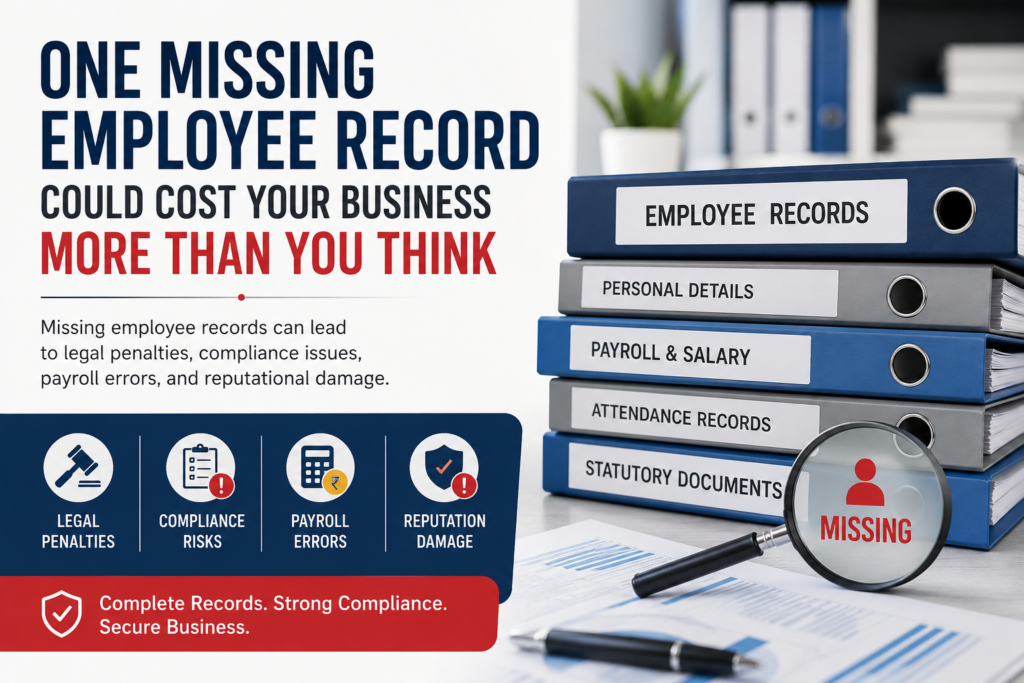
Many businesses focus on sales, customer service, and growth—but often overlook something just as important: employee documentation.
A single missing employee record may seem like a minor administrative issue. However, during a labour inspection, compliance audit, legal dispute, or government verification, that missing document can lead to penalties, delays, and unnecessary legal complications.
Proper employee records are not just paperwork—they are proof that your business follows labour laws and protects both the employer and employees.
Why Employee https://vpassociatess.in/Records Matter
Every employee should have a complete and updated file containing essential employment documents. These records help businesses:
- Comply with labour laws and regulations
- Handle employee disputes with confidence
- Prepare for government inspections
- Process payroll accurately
- Maintain transparency and professionalism
When records are incomplete, employers may struggle to prove employment terms, attendance, salary payments, or statutory compliance.
Essential Employee Records Every Business Should Maintain
A complete employee file should typically include:
- Employment application and resume
- Appointment letter
- Identity and address proof
- Educational and experience certificates
- Signed employment agreement
- Attendance records
- Salary and payroll records
- Leave records
- Performance evaluations
- PF, ESI, and other statutory documents (where applicable)
- Resignation or termination documents
Keeping these records updated is just as important as collecting them.
Risks of Missing Employee Records
1. Legal Penalties
Government authorities may impose penalties if mandatory employment records are missing or incomplete.
2. Labour https://vpassociatess.in/Disputes
If an employee raises a complaint regarding salary, benefits, or employment terms, missing documentation can make it difficult to defend your case.
3. Failed Compliance Audits
Labour inspections and compliance audits often require businesses to produce employee records immediately. Missing files can raise red flags.
4. Payroll Errors
Incomplete employee information may result in incorrect salary calculations, tax deductions, or statutory contributions.
5. Loss of Business Reputation
Poor documentation reflects weak internal management, which can affect trust among clients, investors, and business partners.
Common Documentation Mistakes Businesses Make
Many businesses unknowingly create compliance risks by:
- Not issuing appointment letters
- Losing signed employee agreements
- Maintaining incomplete attendance records
- Forgetting to update employee details
- Storing documents in multiple unorganized locations
- Missing statutory registration documents
- Ignoring document retention requirements
Even one missing file can become a major issue during inspections.
Best Practices for https://vpassociatess.in/Employee Record Management
To reduce compliance risks:
- Create a standard employee file checklist.
- Maintain both physical and digital records.
- Review employee files regularly.
- Keep payroll and attendance records updated.
- Store documents securely with controlled access.
- Ensure statutory records are maintained according to applicable laws.
- Conduct periodic internal compliance audits.
A systematic approach saves time and reduces legal risk.
How Professional Compliance Support Helps
Compliance professionals help businesses:
- Review employee documentation
- Identify missing records
- Maintain statutory registers
- Prepare for labour inspections
- Improve HR documentation processes
- Reduce legal and financial risks
This allows business owners to focus on growth while ensuring compliance requirements are met.
Conclusion
One missing employee https://vpassociatess.in/record may appear insignificant today, but it can become a costly problem tomorrow. Proper documentation protects your business, supports smooth operations, and demonstrates professional management.
Regularly reviewing employee records is one of the simplest ways to avoid legal complications and stay compliant with employment regulations.
Need help organizing your employee records and ensuring labour law compliance? Partner with experienced compliance professionals to keep your business protected, audit-ready, and legally compliant.
Leave a Reply