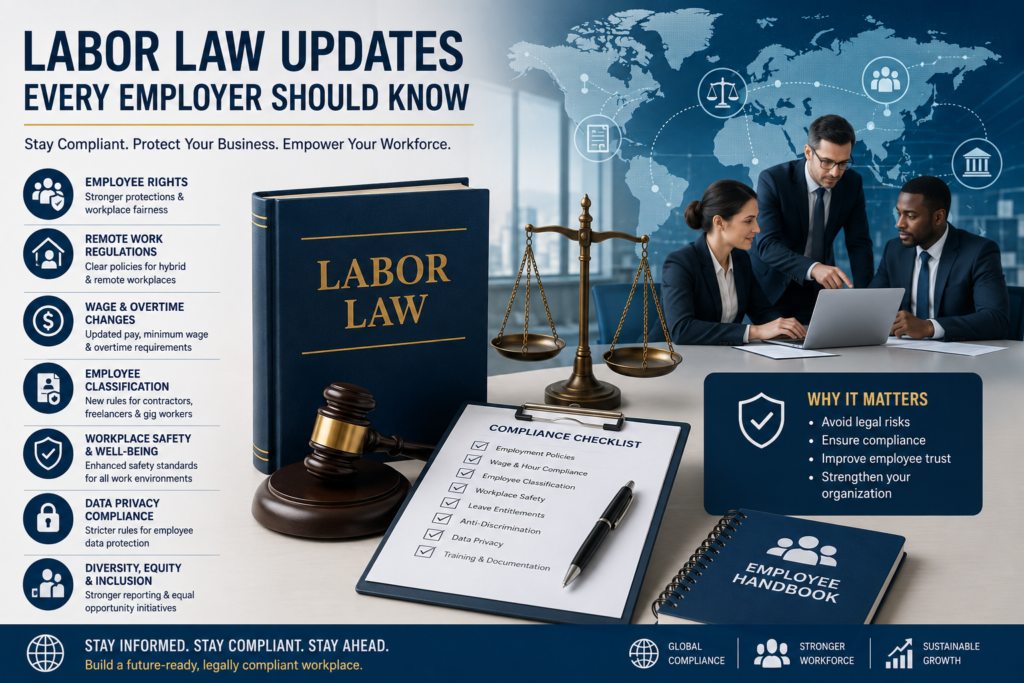
In today’s rapidly evolving regulatory landscape, Labor Law Updates Every Employer Should Know have become essential knowledge for organizations operating across multiple jurisdictions. Employment regulations continue to evolve in response to changing workforce expectations, technological advancements, remote work models, and increasing employee protections. Businesses that fail to stay updated risk legal disputes, financial penalties, reputational damage, and operational disruptions.
Whether you manage a multinational corporation or oversee HR operations for a growing enterprise, understanding the latest labor law updates for employers is critical for maintaining global labor law compliance and fostering a legally compliant workplace.
This guide explores the most significant employment law developments, their impact on employers, and practical steps organizations can take to remain compliant.
Why Labor Law Updates Matter
Employment legislation directly influences hiring practices, employee rights, workplace safety, compensation, leave policies, data privacy, and termination procedures. Governments worldwide continue introducing reforms designed to improve workplace fairness while adapting regulations to modern employment practices.
Keeping pace with employment law changes for businesses helps organizations:
- Reduce legal and financial risks
- Strengthen employer reputation
- Improve employee trust
- Ensure operational continuity
- Maintain regulatory compliance across regions
Organizations with proactive compliance programs are better positioned to navigate changing legal requirements while supporting sustainable business growth.
Key Labor Law Updates Every Employer Should Know
Stronger Employee Protection Regulations
Many countries have introduced enhanced protections against workplace discrimination, harassment, retaliation, and unfair dismissal.
What does this mean for employers?
Employers should:
- Update anti-harassment policies
- Conduct regular compliance training
- Strengthen reporting mechanisms
- Maintain detailed documentation of workplace investigations
A proactive approach minimizes legal exposure while creating a more inclusive workplace.
Remote and Hybrid Work Regulations
The expansion of remote work has prompted governments to introduce clearer legal frameworks governing hybrid employment.
Which remote work policies should employers review?
Organizations should evaluate:
- Working hours
- Overtime eligibility
- Home office reimbursements
- Cross-border employment obligations
- Employee monitoring practices
- Data protection requirements
Modern remote work policies should align with evolving workplace compliance regulations in every jurisdiction where employees operate.
Wage and Overtime Law Changes
Several jurisdictions continue increasing minimum wages while tightening overtime requirements.
How can businesses stay compliant?
Employers should:
- Review payroll systems regularly
- Audit employee classifications
- Monitor local wage legislation
- Verify overtime calculations
Routine payroll compliance reviews significantly reduce the likelihood of regulatory violations.
Employee Classification Rules
Governments continue scrutinizing worker classifications, especially regarding freelancers, contractors, consultants, and gig workers.
Why is employee classification important?
Incorrect classification may result in:
- Tax liabilities
- Benefit claims
- Back wages
- Regulatory penalties
- Employment litigation
Organizations should periodically review contractor relationships to ensure compliance with local labor laws.
Expanded Leave Entitlements
Many countries have broadened employee leave rights, including:
- Paid family leave
- Mental health leave
- Caregiver leave
- Parental leave
- Medical leave
- Bereavement leave
How should HR teams prepare?
Human Resources departments should revise employee handbooks and HRIS systems to accurately reflect updated leave requirements.
Workplace Health and Safety Standards
Health and safety regulations continue expanding beyond traditional workplaces to include remote work environments.
What are employers expected to do?
Employers should:
- Conduct workplace risk assessments
- Update safety procedures
- Train managers
- Maintain incident reporting processes
- Promote employee well-being initiatives
Compliance with workplace safety obligations remains one of the most important employer legal responsibilities.
Data Privacy in Employment
Employee data protection laws continue evolving worldwide.
Organizations should carefully manage:
- Employee monitoring
- Recruitment data
- Payroll records
- Biometric information
- Performance records
- AI-assisted hiring systems
Employers should ensure HR teams collaborate closely with IT and legal departments to maintain compliance.
Diversity, Equity, and Inclusion Reporting
Increasingly, governments require organizations to report diversity metrics and demonstrate equal employment practices.
How can businesses improve compliance?
Recommended actions include:
- Reviewing recruitment processes
- Conducting pay equity analyses
- Implementing inclusive hiring practices
- Monitoring diversity metrics
- Providing leadership training
Strong DEI initiatives contribute to both regulatory compliance and organizational performance.
Best Practices for Global Labor Law Compliance
Organizations operating internationally should adopt a structured compliance framework.
Establish a Global Compliance Program
Develop standardized policies while allowing local legal customization.
Monitor Legislative Changes
Regularly review employment legislation across all operating regions.
Conduct Compliance Audits
Internal audits identify policy gaps before they become legal risks.
Train HR and Management Teams
Ongoing compliance education helps leaders apply employment laws consistently.
Maintain Accurate Documentation
Comprehensive documentation supports compliance during inspections and legal proceedings.
Partner with Employment Law Experts
Legal professionals can provide jurisdiction-specific guidance for complex employment matters.
Lahttps://vpassociatess.in/bor Law Compliance Checklist
Use this checklist to strengthen your organization’s compliance efforts:
- Review employee handbook annually
- Update HR policies regularly
- Audit payroll compliance
- Verify worker classifications
- Review leave policies
- Conduct workplace investigations properly
- Implement manager compliance training
- Protect employee data
- Monitor global regulatory updates
- Schedule annual legal compliance reviews
Following a structured labor law compliance checklist helps organizations minimize legal risk while improving governance.
Common Mistakes Employers Should Avoid
Many compliance issues arise from avoidable mistakes such as:
- Ignoring legislative updates
- Using outdated employment contracts
- Misclassifying workers
- Inadequate manager training
- Poor documentation
- Inconsistent disciplinary procedures
- Delayed policy updates
Avoiding these mistakes strengthens legal compliance and protects organizational reputation.
The Future of Employhttps://vpassociatess.in/ment Law
Employment regulation will continue evolving as governments respond to:
- Artificial intelligence in recruitment
- Flexible work arrangements
- Pay transparency laws
- Employee privacy
- ESG reporting
- Workforce globalization
- Digital workplace governance
Forward-thinking employers should build compliance into strategic business planning rather than treating it as a reactive legal function.
Frequently Asked Questions
What are the latest labor law updates employers should monitor?
Employers should monitor wage regulations, employee classification rules, leave policies, workplace safety standards, remote work legislation, data privacy requirements, and anti-discrimination laws.
Why are labor law updates important?
They help businesses avoid legal penalties, improve employee relations, reduce compliance risks, and maintain operational continuity.
How often should companies revhttps://vpassociatess.in/iew HR policies?
Organizations should review HR policies at least annually and immediately following significant legislative changes.
What is global labor law compliance?
Global labor law compliance involves ensuring employment practices comply with applicable labor regulations in every country where an organization operates.
How can employers reduce labor law compliance risks?
Businesses should conduct regular audits, update policies, train managers, monitor legal developments, and seek professional legal guidance when necessary.
Conclusion
Staying informed about Labor Law Updates Every Employer Should Know is no longer optional for modern organizations. As regulations continue evolving across global markets, employers must proactively monitor legal developments, strengthen internal compliance programs, and regularly update workplace policies.
By investing in compliance today, organizations can reduce legal exposure, improve employee confidence, support sustainable growth, and maintain a competitive advantage in an increasingly regulated business environment.
Leave a Reply