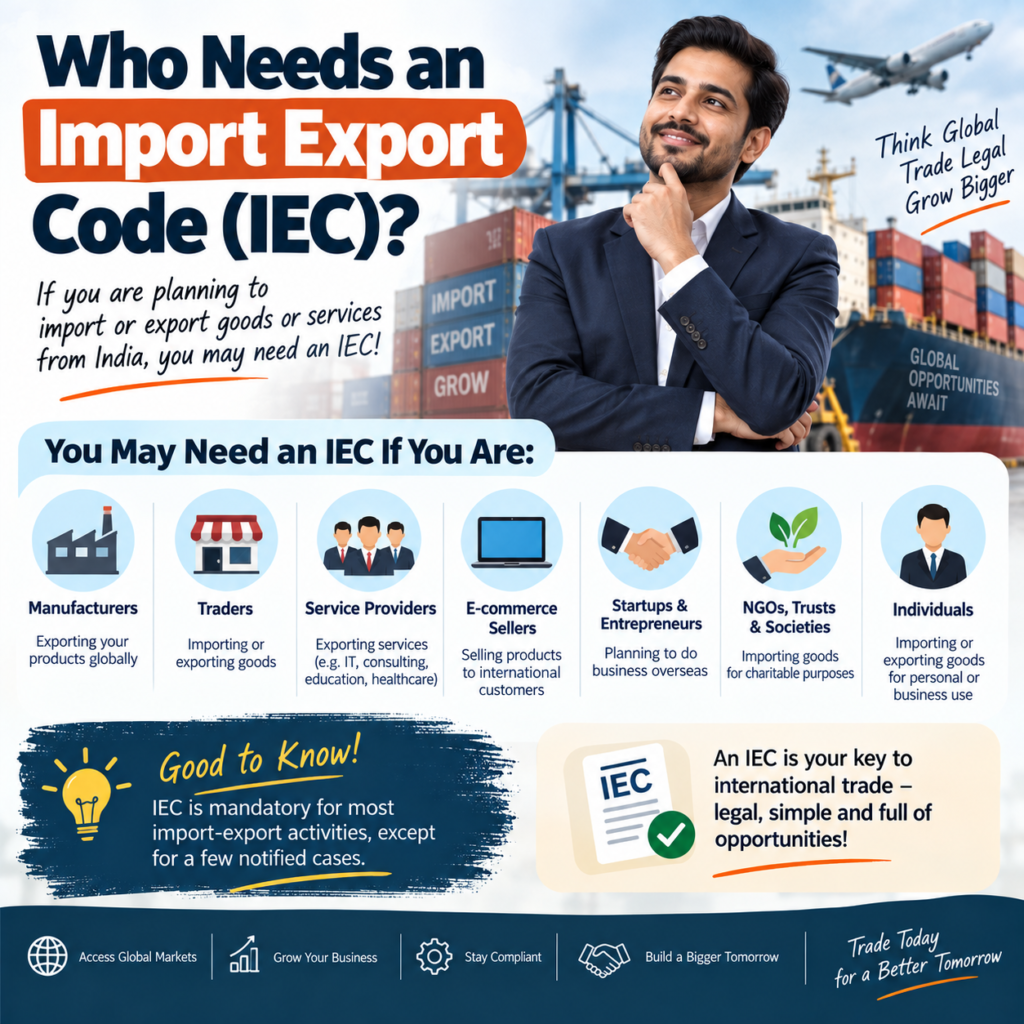
Who Needs an Import Export Code (IEC)?
In today’s global business environment, Indian businesses are increasingly buying products from international suppliers and selling goods or services to customers outside India. If you are planning to import or export from India, one of the most important registrations you may need is an Import Export Code (IEC).
An IEC is a unique identification number issued by the Directorate General of Foreign Trade (DGFT). It is generally required for businesses involved in the import or export of goods from India, subject to applicable exemptions.
But who exactly needs an IEC? Let’s understand.
What Is an Import Export Code?
Import Export Code, commonly known as IEC, is a 10-digit identification number required for many businesses carrying out import or export activities.
It helps authorities identify businesses involved in international trade and is commonly required for customs clearance and various foreign trade transactions.
For businesses planning to expand beyond the Indian market, obtaining the appropriate IEC can be an important compliance step.
Who Needs an IEC?
1. Businesses Importing Goods Into India
If a business purchases physical goods, machinery, equipment, raw materials, or other products from suppliers located outside India, it may require an IEC for carrying out the import transaction.
For example, a manufacturing company importing machinery from Germany may need an IEC to complete the relevant import formalities.
2. Businesses Exporting Goods From India
Businesses selling physical products to customers outside India generally require an IEC for export-related activities, subject to applicable exemptions.
This can include manufacturers, wholesalers, traders, distributors, and online sellers exporting products internationally.
3. Manufacturers Planning International Expansion
Indian manufacturers looking to sell their products in overseas markets may need an IEC as part of their export compliance requirements.
Having the appropriate documentation in place can help businesses manage international orders and customs-related procedures more efficiently.
4. Traders and Merchant Exporters
A trader purchasing products in India and exporting them to an overseas buyer may also require an IEC.
Merchant exporters should ensure that their business and foreign trade documentation are properly maintained before beginning export operations.
5. E-Commerce Businesses Selling Internationally
Online businesses selling physical products to customers in other countries may also need to consider IEC requirements.
With the growth of cross-border e-commerce, small businesses and online sellers should understand their applicable import-export and customs obligations before shipping products internationally.
Who May Not Need an IEC?
Not every international transaction automatically means that an IEC is required.
There are specific exemptions under the applicable foreign trade regulations. For example, certain categories of transactions or persons may be exempt from the IEC requirement.
Therefore, businesses should check the latest DGFT rules and applicable exemptions based on the nature of their transaction instead of assuming that every international payment or shipment requires an IEC.
Is IEC Required for Export of Services?
The requirement can differ for service exporters depending on the nature of the transaction and applicable regulations.
Businesses providing services to foreign clients should therefore examine their specific circumstances, including foreign exchange and banking requirements, rather than assuming that the rules for export of goods automatically apply to services.
Why Is IEC Important?
An IEC can be an important part of a business’s international trade compliance.
It may be required for activities such as:
- Importing goods into India
- Exporting goods from India
- Completing customs-related procedures
- Conducting certain international trade transactions
- Supporting documentation for foreign trade activities
- Expanding a business into international markets
Without the required documentation, an importer or exporter may face delays or difficulties in completing a transaction.
What Happens If a Business Does Not Have the Required IEC?
If an IEC is required for a transaction but the business does not have one, it may face difficulties with customs and other import-export formalities.
This can result in transaction delays and additional compliance issues.
Therefore, it is better to understand the requirements before placing an international order or accepting an overseas shipment.
How Can a Business Apply for IEC?
IEC applications are generally made online through the DGFT portal.
A business should keep the required details and documents ready and ensure that the information submitted in the application is accurate.
After receiving the IEC, businesses should also ensure that their details remain updated as required under the applicable DGFT rules.
Final Thoughts
An Import Export Code can be an essential requirement for many Indian businesses involved in importing or exporting goods.
Whether you are a manufacturer, trader, merchant exporter, or an e-commerce business planning to sell products internationally, understanding IEC requirements before starting foreign trade can help you avoid unnecessary compliance problems.
However, IEC requirements can depend on the nature of the transaction and applicable exemptions. Businesses should verify the latest DGFT requirements before beginning import or export activities.
Leave a Reply