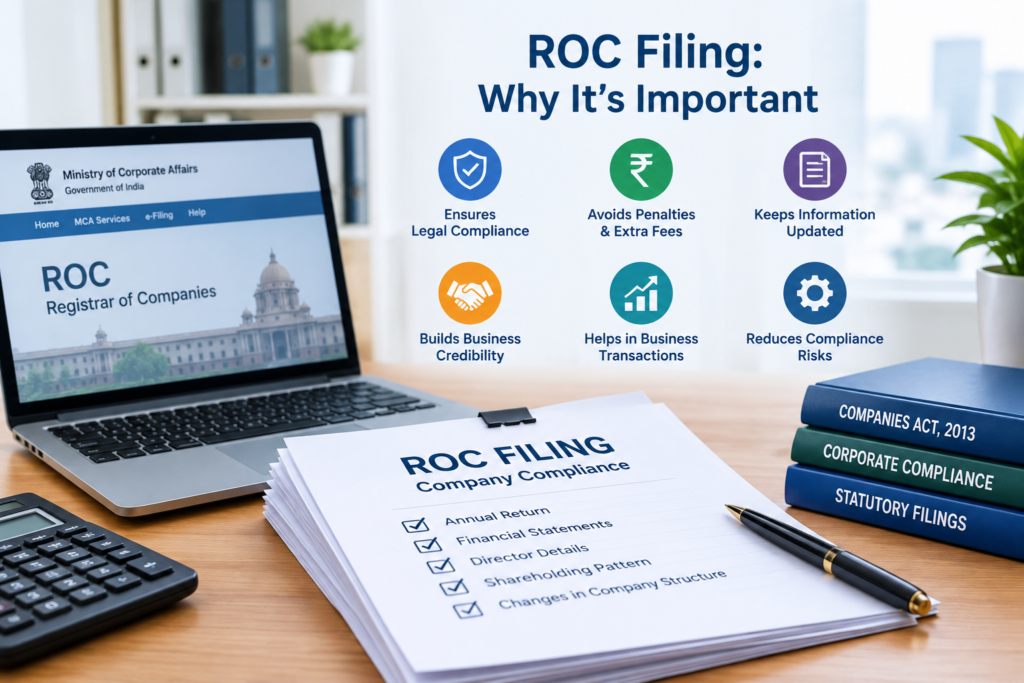
Here is a detailed, easy-to-understand blog for a business/legal compliance website:
Running a company involves much more than managing sales, employees, customers, and finances. Companies registered under the Companies Act, 2013 also have various legal and compliance responsibilities. One important responsibility is ROC filing.
ROC stands for Registrar of Companies. Companies are required to submit certain information and documents to the ROC within the applicable timelines. These filings help maintain the company’s legal and financial records with the government.
But why is ROC filing so important? Let’s understand.
What Is ROC Filing?
ROC filing refers to the submission of prescribed company-related documents, returns, and financial information to the Registrar of Companies.
Depending on the type and circumstances of the company, filings may include information related to:
- Financial statements
- Annual returns
- Company directors and key management
- Registered office details
- Shareholding information
- Charges created on company assets
- Changes in company structure or management
The exact filing requirements and applicable forms can vary depending on the company and the nature of the transaction or compliance.
Why Is ROC Filing Important?
1. It Helps Maintain Legal Compliance
Timely ROC filing helps a company meet its statutory compliance responsibilities. Regular compliance demonstrates that the company is maintaining its required records and fulfilling applicable legal obligations.
Ignoring these requirements can result in additional compliance issues and penalties.
2. Avoids Additional Fees and Penalties
Late filing can result in additional fees and, depending on the applicable provision, penalties or other consequences.
Therefore, companies should keep track of their filing due dates and complete the required filings on time.
3. Keeps Company Information Updated
ROC records contain important information about a company.
Regular filings help keep information regarding the company’s financial position, directors, registered office, shareholding, and other relevant details updated as required.
Accurate records are important for both compliance and business transparency.
4. Builds Business Credibility
A company that follows its statutory compliance requirements can create greater confidence among stakeholders.
Investors, lenders, business partners, and other stakeholders may want to know whether a company maintains proper legal and financial records.
Good compliance practices can therefore contribute to a company’s professional image.
5. Helps During Business Transactions
ROC compliance may become particularly important when a company is planning activities such as:
- Raising investment
- Applying for business finance
- Entering into major business arrangements
- Bringing in new shareholders
- Restructuring the company
- Merging or making other corporate changes
Properly maintained corporate records can make compliance checks and documentation processes smoother.
6. Reduces the Risk of Compliance Problems
Missing one filing may lead to a chain of compliance issues. When companies maintain a proper compliance calendar and complete their filings on time, they can reduce the possibility of missed deadlines.
Regular compliance monitoring also helps identify pending requirements before they become bigger problems.
What Happens If ROC Filing Is Not Done on Time?
Failure to complete applicable ROC filings within the prescribed timeline can have consequences.
Depending on the type of filing and the circumstances, these may include:
- Additional filing fees
- Penalties
- Compliance notices or regulatory action
- Restrictions or other consequences under applicable law
- Difficulty during certain corporate transactions
The consequences can vary, so companies should not assume that a missed filing is a minor issue.
Who Needs to Pay Attention to ROC Filing?
ROC compliance is particularly relevant for companies registered under the Companies Act.
Different types of companies can have different compliance requirements. For example, the requirements applicable to a private company may differ from those applicable to a public company or other corporate structure.
Therefore, businesses should understand the specific compliance requirements applicable to their company instead of following a one-size-fits-all approach.
How Can Companies Manage ROC Compliance?
Managing ROC compliance becomes easier when companies maintain a systematic process.
Maintain a Compliance Calendar
Keep track of all applicable filing deadlines and important corporate compliance dates.
Keep Financial Records Updated
Proper books and financial information make it easier to prepare the required documents and filings.
Maintain Corporate Documents
Keep important documents such as minutes, resolutions, registers, statutory records, and company-related documents properly organized.
Review https://vpassociatess.in/Changes Promptly
Changes involving directors, registered office, shareholding, capital, or other company details may trigger specific compliance requirements. Such changes should be reviewed promptly.
Take Professional Assistance When Required
ROC compliance can involve detailed documentation and legal requirements. A Chartered Accountant, Company Secretary, or other qualified professional can help businesses understand their applicable requirements and complete filings correctly.
Common Mistakes Companies Should Avoid
Some common compliance mistakes include:
- Missing filing deadlines
- Providing incorrect information
- Failing to update company records
- Not maintaining proper supporting documents
- Ignoring previous pending filings
- Waiting until the last minute to prepare documents
A proactive approach can help reduce these risks.
Why Timely ROC Filing Is Better Than Last-Minute Compliance
Last-minute filing can create unnecessary pressure. Documents may require corrections, financial information may need verification, and approvals may take time.
Planning compliance in advance gives the company sufficient time to review information and resolve issues before the applicable deadline.
Final Thoughts
ROC filing is an important part ohttps://vpassociatess.in/f maintaining proper corporate compliance in India. It helps companies meet their statutory responsibilities, maintain accurate records, avoid unnecessary compliance issues, and demonstrate responsible business practices.
Instead of treating ROC filing as a routine formality, companies should include it as an important part of their regular compliance process.
Leave a Reply