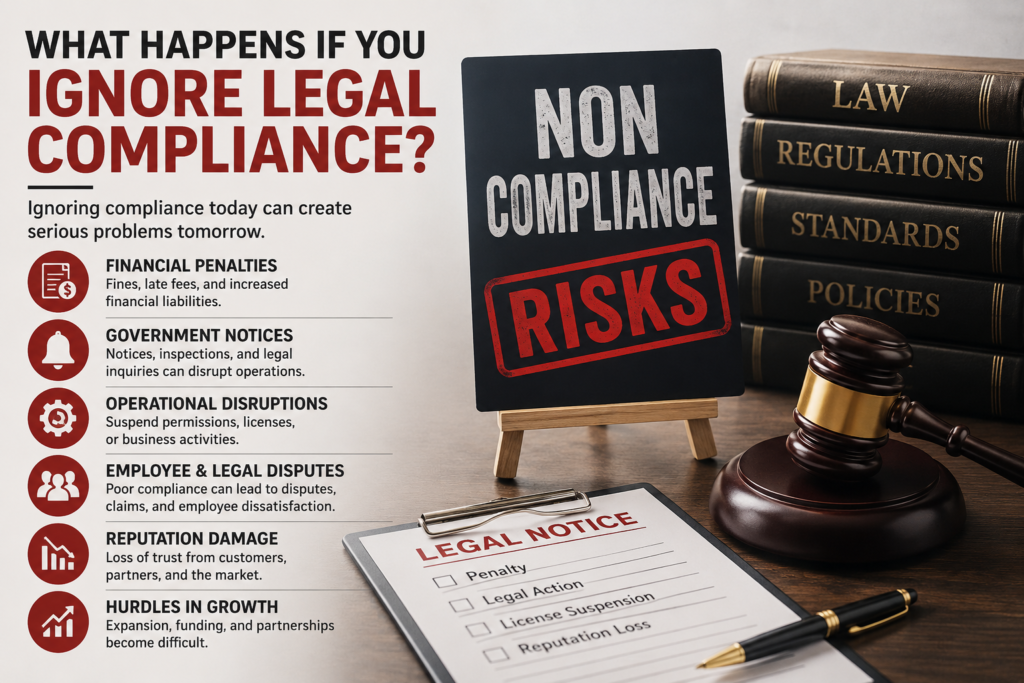
Legal compliance is an essential part of running a business. Whether you operate a small business, startup, manufacturing unit, service company, or growing enterprise, following applicable laws and maintaining proper documentation is not optional.
Many businesses focus on sales, customers, employees, and expansion while treating compliance as a secondary task. However, ignoring legal requirements can create financial, operational, and reputational problems that become much more expensive to resolve later.
What Is Legal Compliance?
Legal compliance means following the laws, regulations, rules, licenses, registrations, and reporting requirements applicable to your business.
Depending on the nature and size of the organization, compliance may involve areas such as:
- Business registrations and licenses
- Tax and GST-related requirements
- Labour and employment laws
- Employee documentation
- Contract and agreement management
- Statutory filings
- Workplace regulations
- Industry-specific regulations
- Record keeping and reporting
The exact requirements depend on your business structure, industry, location, workforce, and activities.
What Happens When Legal Compliance Is Ignored?
1. Financial Penalties Can Increase
One of the most immediate consequences of non-compliance can be penalties, interest, late fees, or other financial liabilities.
A missed filing or overlooked requirement may initially seem like a small issue. But if it remains unresolved, the financial consequences can increase over time.
2. Government Notices and Inspections
Non-compliance can result in notices, queries, inspections, or requests for documents from the relevant authorities.
When records are incomplete or documents are not properly maintained, responding to such requirements can become stressful and time-consuming.
3. Business https://vpassociatess.in/Operations May Be Disrupted
Some compliance failures can affect the normal functioning of a business.
Depending on the violation and applicable law, businesses may face restrictions, suspension of permissions, licensing issues, or other operational difficulties.
4. Employee-Related Problems Can Increase
Poor compliance with employment-related requirements can create disputes between employers and employees.
Missing appointment letters, incomplete employee records, improper policies, or failure to follow applicable labour requirements can make it harder for a business to defend itself when a dispute arises.
5. Contracts and Business Dhttps://vpassociatess.in/eals Can Be Affected
Clients, investors, banks, suppliers, and business partners often expect organizations to maintain proper legal and financial documentation.
Compliance gaps can raise questions about the reliability and professionalism of a business and may delay important transactions.
6. Reputation Can Suffer
A business can spend years building trust but lose it quickly when serious compliance problems become public.
Customers and business partners want to work with organizations that demonstrate responsibility, transparency, and professionalism.
7. Expansion Can Become Difficult
Businesses often discover the importance of compliance when they are ready to expand.
Opening new locations, attracting investors, entering partnerships, hiring more employees, or working with larger clients may require organized records and evidence of compliance.
If the foundation is weak, expansion can become slower and more complicated.
Why “We’ll Fix It Later” Can Be Risky
One of the biggest mistakes businesses make is postponing compliance because there is no immediate problem.
The problem is that compliance issues can accumulate.
A missed filing today, incomplete document tomorrow, and outdated registration later can eventually create a much larger compliance backlog.
Fixing problems proactively is generally easier than trying to reconstruct years of records after receiving a notice or facing an audit.
How Businesses Can Stay https://vpassociatess.in/Compliant
A proactive approach can make compliance more manageable.
Businesses should:
- Identify the laws and regulations applicable to their operations.
- Maintain a compliance calendar with important deadlines.
- Keep statutory and employee records organized.
- Review licenses, registrations, and agreements periodically.
- Track changes in applicable laws and regulations.
- Assign responsibility for important compliance activities.
- Conduct periodic internal compliance reviews.
- Seek professional guidance whenever requirements are unclear.
Compliance Is an Investment, Not Just an Expense
Legal compliance may seem like an additional business cost, but it can protect the organization from much larger financial and operational risks.
Good compliance practices help businesses stay organized, reduce avoidable mistakes, respond confidently to regulatory requirements, and build credibility with employees, customers, investors, and business partners.
Final Thoughts
Ignoring legal compliance can turn a small administrative oversight into a serious business problem. Penalties, notices, disputes, operational disruptions, reputational damage, and expansion challenges are some of the risks businesses may face when compliance is neglected.
Instead of waiting for a notice or problem to appear, businesses should make compliance a regular part of their operations.
Stay compliant today to protect your business tomorrow.
Leave a Reply