Compliance is an essential part of running a business, but it can quickly become overwhelming when deadlines are missed, records are incomplete, or statutory filings are not properly tracked. For many business owners, compliance problems are not intentional—they happen because of a lack of time, changing regulations, poor documentation, or simply not knowing what needs to be filed and when.
A client’s compliance turnaround is a good example of how identifying issues early, organizing records, and following a structured compliance process can bring a business back on track.
The Challenge: https://vpassociatess.in/Compliance Was Becoming Difficult to Manage
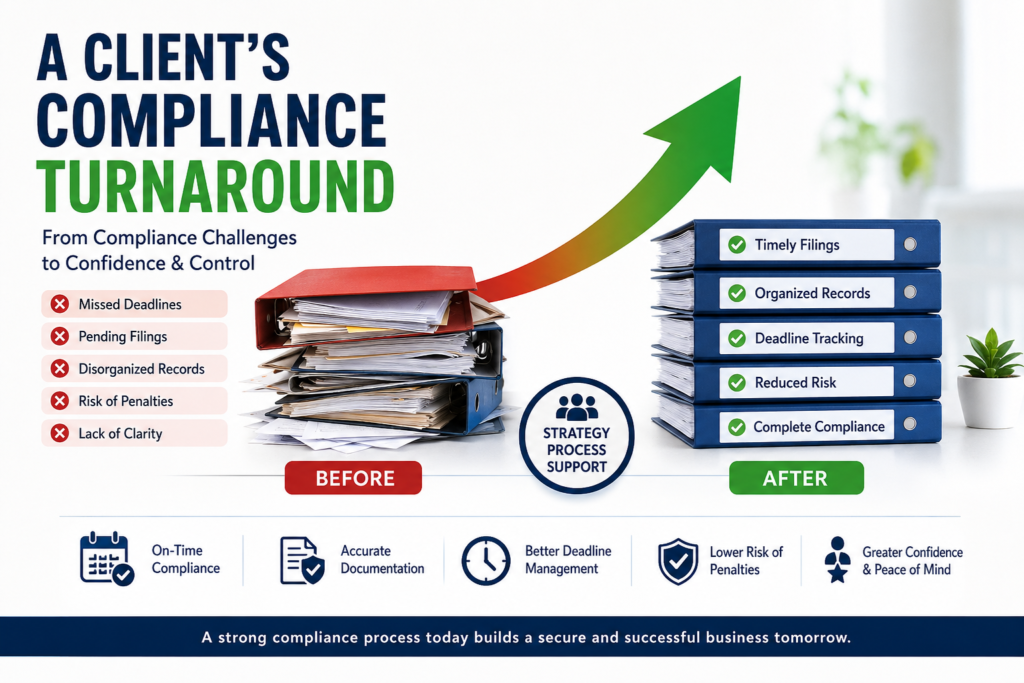
The client had been managing day-to-day business operations while compliance responsibilities were handled irregularly. Over time, several issues started building up:
- Missed or delayed statutory filings
- Incomplete documentation
- Unorganized financial records
- Difficulty tracking important deadlines
- Risk of notices and penalties
- Lack of clarity about ongoing compliance requirements
While the business itself was functioning, its compliance position needed immediate attention.
Step 1: Identifying the https://vpassociatess.in/Compliance Gaps
The first step was to understand exactly where the problems existed.
A detailed review was conducted covering applicable registrations, previous filings, financial records, tax-related documents, statutory requirements, and pending obligations.
Instead of trying to fix everything at once, the issues were categorized according to their urgency and potential impact.
This helped create a clear picture of what had already been completed, what was pending, and what required corrective action.
Step 2: Organizing the Documentation
Incomplete or scattered documentation can make compliance unnecessarily complicated.
The client’s available records were organized systematically. Relevant invoices, financial statements, tax documents, registration details, https://vpassociatess.in/previous returns, and other supporting records were reviewed and arranged.
This not only helped address existing compliance issues but also created a better foundation for future filings.
Step 3: Clearing Pending Compliance
Once the gaps were identified and documents organized, pending compliance requirements were addressed according to their priority.
The focus was on completing necessary filings, correcting discrepancies where required, maintaining proper supporting documentation, and reducing the risk of further non-compliance.
The objective was not simply to “file the pending returns.” It was to establish a process that would prevent the same problems from recurring.
Step 4: Creating a Compliance Calendar
One of the biggest improvements was introducing a structured compliance calendar.
Instead of remembering deadlines manually, the business could track important recurring obligations in advance.
A compliance calendar can include:
- Tax filing deadlines
- GST-related requirements, where applicable
- TDS-related compliances
- Annual filing requirements
- Licence and registration renewals
- Accounting and documentation tasks
- Other industry-specific statutory obligations
This makes compliance proactive rather than reactive.
The Result: Better Control and Greater Confidence
After the turnaround process, the client had a much clearer understanding of their compliance position.
The business moved from uncertainty and last-minute filing to a more organized system with:
- Better documentation
- Improved deadline tracking
- Greater visibility over pending obligations
- Reduced risk of avoidable penalties
- A structured approach to recurring compliance
- Better confidence in financial and statutory records
The biggest change was not just completing pending work—it was creating a sustainable compliance process for the future.
What Businesses Can Learn From This
A compliance problem does not necessarily mean that a business is poorly managed. Sometimes, compliance simply gets overlooked while the owner focuses on customers, employees, sales, and daily operations.
However, delaying compliance can make a small issue more complicated and expensive later.
Regular compliance reviews can help businesses identify problems before they become serious. Maintaining accurate records, monitoring deadlines, and taking professional assistance when required can make the entire process significantly easier.
Compliance Is an Ongoing Process
Compliance should not be treated as a once-a-year activity. It is an ongoing responsibility that requires regular monitoring.
Whether you are a startup, small business, professional, trader, or growing company, having a proper compliance system can help you stay organized and focus on running your business.
A compliance turnaround is not just about fixing the past—it is about building a better system for the future.
If your business has pending filings, documentation gaps, or uncertainty about its compliance status, a professional review can help you understand the current position and determine the appropriate next steps.
Leave a Reply